English
 中文简体
Made of PBS (Polybutylene Succinate), fully biodegradable.Features:1.Home compostable2.Raw material: PBS Polybutylene Su...
READ MORE
Content
A buyer once asked for “certified compostable yarn” and received a certificate for a 40-micron film made from the same polymer family. The document was real. It simply did not cover the yarn, the dye, or the intended nonwoven. That is the first lesson in compostable textile certification: a certificate is evidence for a defined product, test method, and disposal route, not a transferable green badge.
The practical conclusion is simple. Before sourcing, confirm four things: the exact material and construction covered, the standard used, the disposal environment the claim refers to, and whether the certificate holder is the supplier in front of you. If any one of those is unclear, treat the claim as unverified.
Compostability is a stricter claim than biodegradability. A biodegradable material may break down over time, but compostable certification usually requires measurable biodegradation, physical disintegration, chemical safety, and no harmful residue under defined conditions. For industrial composting, programs commonly look for around 90% biodegradation within 180 days and at least 90% disintegration within 12 weeks, supported by ecotoxicity and heavy-metal checks. Those figures are not universal; the certificate must state its own pass criteria.
Disposal route matters just as much. Industrial composting runs at controlled, elevated temperatures. Home composting is slower and less predictable. A material certified for one route should not be marketed for the other without specific evidence. The same distinction applies to soil, sludge, and water environments. If a supplier says “compostable” without naming the route, ask for the test report before you quote a customer.
Read the certificate like a specification sheet. The headline logo is less useful than the scope paragraph, the standard reference, the test laboratory, and the date. The table below gives the checks that matter most in textile procurement.
| Check | What to ask | Why it matters |
|---|---|---|
| Certificate scope | Exact grade, color, thickness, mass per area, and add-ons covered | A raw-fiber certificate does not automatically cover dyed fabric or a finished nonwoven. |
| Standard and method | EN 13432, ASTM D6400, ISO 17088, ISO 14855, ISO 20200, or a program-specific method | Different tests answer different questions; a pass in one setting is not proof in another. |
| Disposal route | Industrial composting, home composting, soil, sludge, or water | Home compost claims cannot be inferred from industrial compost data. |
| Pass criteria | Biodegradation %, disintegration %, ecotoxicity, heavy metals, and residual fragments | A “biodegradable” result alone is not compostability certification. |
| Traceability | Laboratory report, batch reference, validity date, and certificate holder | A similar grade from another batch or supplier is not covered by the same document. |
Common reference methods include EN 13432, ASTM D6400, ISO 17088, ISO 14855, and ISO 20200, but they are not identical. EN 13432 and ASTM D6400 are often used for compostable plastics and packaging; textile programs may adapt them with additional chemical-safety review. Ask which method was actually run, on which sample, and at what thickness or mass per area.
Most failures occur at the boundaries of the product, not in the main fiber. A compostable yarn can become non-compostable after dyeing, softening, coating, or blending. Elastane, certain sewing threads, labels, zippers, and prints can disqualify a finished item even when the base fabric passes. For apparel and home textiles, the whole-item claim needs evidence for every component that remains in the waste stream.
Procurement teams should also separate a fiber certificate from a fabric certificate. A certificate for PLA filament does not automatically cover a needlepunched nonwoven with a binder, a dyed knit, or a laminated composite. Colorants and additives can affect ecotoxicity results. Thickness and surface area can affect disintegration. If a supplier changes a color, finish, or component, ask whether the certificate still applies or whether a new test is required.
For a spinner or nonwoven producer, the practical route is to start with a fiber whose test report matches the intended disposal route, then lock the construction before making a customer claim. A filament yarn suits continuous melt-spun structures; staple fiber fits carded, airlaid, or needlepunched nonwovens. The certificate should name the grade, denier, color, and add-on, not just the polymer family.
 PLA Biodegradable Filament Yarn for Melt-Spun TextilesContinuous PLA filament yarn in DTY 50D–150D for weaving and knitting; check grade and test scope for the intended compostable structure.View Product →
PLA filament is one option for melt-spun compostable structures, but the grade and test scope still need checking. For nonwoven and staple-spun routes, PLA staple fiber can be more practical because it matches carding and thermal bonding lines.
 PLA Biodegradable Staple Fiber for Nonwoven LinesBio-based staple fiber in 1.5D×38mm and 1.5D×51mm for carding, thermal bonding, and nonwovens; confirm batch report for the disposal route.View Product →
PBS staple fiber can offer a different balance of flexibility and processing behavior in selected applications. It is not a drop-in replacement for every PLA line, so request a sample and a batch-specific report.
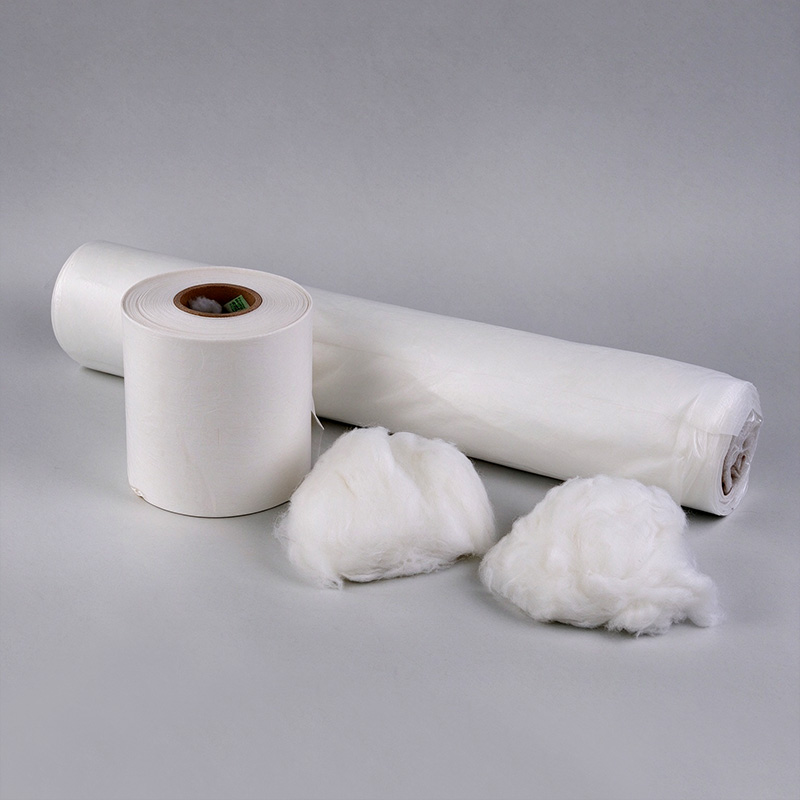 PBS Staple Fiber for Compostable NonwovensTUV-certified home-compostable PBS staple fiber for wipes, hygiene, agricultural fabrics, and blends; custom deniers and cut lengths are made to order.View Product →
It also helps to involve the fiber supplier early. Our biodegradable yarn range covers PLA, PBS, and related options, while custom R&D and co-development can align denier, color, and processing before a certification claim is made.
Use this checklist before approving a compostable textile claim for a product launch or customer quotation.
Not necessarily. Many certificates are for industrial composting, where temperature and aeration are controlled. Home composting requires separate evidence and usually a different certification scope.
No. Biodegradation data is only one part. A credible compostability claim also considers disintegration, ecotoxicity, heavy metals, and the full product construction.
Usually not in the same sense as PLA or PBS. Recycled content and compostability are different attributes. A recycled fiber may support circularity goals, but it should not be presented as compostable without specific test evidence.
Ask for the certificate, the underlying test report, the standard used, the covered grade and color, the disposal route, and the validity date. If the supplier cannot connect the document to your purchase order, keep the claim on hold.
Compostable textile certification is a chain-of-evidence exercise. The useful question is not “Is this fiber compostable?” but “Which certified product, under which standard, in which disposal system, with which components, and supported by which report?” Get those answers before you print a logo, quote a brand, or ship a fabric.
For PLA, PBS, and biodegradable yarn development, start with the intended end-of-life route and work backward to the fiber, construction, and color. That sequence reduces rework, protects the customer claim, and keeps a sustainability story tied to evidence rather than assumption.
Made of PBS (Polybutylene Succinate), fully biodegradable.Features:1.Home compostable2.Raw material: PBS Polybutylene Su...
READ MOREPlease fill out the form below and our team will contact you as soon as possible.
Addres: No.66 Qiaogang Road, Haian, Nantong City, Jiangsu Province, China
E-mail: service@gcfiber.com admin@gcfiber.com
Copyright ? GC FIBER All Rights Reserved. Eco-Friendly Textile Products Manufacturer Biodegradable Yarn Company