 English
 中文简体
Made of PBS (Polybutylene Succinate), fully biodegradable.
Features:
1.Home compostable
2.Raw material: PBS Polybutylene Succinate
3.Eco-friendly. From the earth, back to the earth.
4.Certified home compostable by TUV.

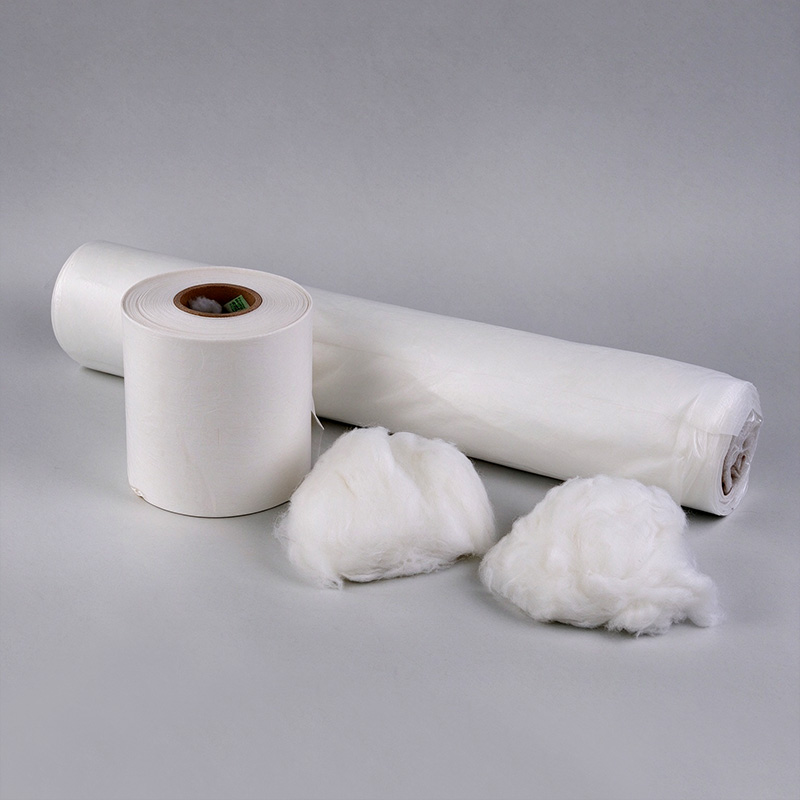
Made of PBS (Polybutylene Succinate), fully biodegradable.
Features:
1.Home compostable
2.Raw material: PBS Polybutylene Succinate
3.Eco-friendly. From the earth, back to the earth.
4.Certified home compostable by TUV.
A glove liner can pass ANSI A4 in the lab and still disappoint on the line if the cuff rolls, the liner stiffens after washing, or the yarn loses tenacity from lot to lot. Cut-resistant HDPE yarn is a high-tenacity pol...
READ MORECompostable Textile Certification Begins With Scope A buyer once asked for “certified compostable yarn” and received a certificate for a 40-micron film made from the same polymer family. The document was real. It simply...
READ MOREIf you are comparing ECDP with cationic dyeable polyester, start with this conclusion: ECDP is usually not a separate fiber family. It is a narrower, easier-dyeing grade within the cationic-dyeable polyester family. The...
READ MOREPBS staple fiber is spun from polybutylene succinate, an aliphatic polyester built from succinic acid and 1,4-butanediol. Because the polymer chain contains ester bonds that microorganisms can break down, the fiber returns to water, CO₂ and biomass in a composting environment instead of staying in soil for decades like polypropylene or polyester.
The properties below are the ones that matter most when you plan a production line around this fiber:
| Property | Typical value for PBS | What it means in production |
|---|---|---|
| Melting point | about 115 °C | Thermal bonding works at low temperature, but dryers, calenders and hot storage must stay below this range. |
| Glass transition temperature | about -32 °C | The fiber stays flexible at room temperature and feels softer than many rigid bio-polyesters. |
| Density | about 1.26 g/cm³ | Close to PET (about 1.38 g/cm³), so web weights and fabric loft are easy to estimate from existing PET experience. |
| Origin of monomers | Fossil-based or bio-based succinic acid | The same polymer family can be supplied with different bio-content, depending on the batch plan. |
Denier (D) is the weight in grams of 9,000 meters of fiber, so 8D means 9,000 m of fiber weighs 8 g. Using the density of PBS, an 8D round fiber works out to a diameter of roughly 30 µm (our own calculation from the denier definition and a density of 1.26 g/cm³). For comparison, a 1.5D fiber commonly used for soft wipes is only about 13 µm thick.
That thickness gives 8D fiber a different job from fine-denier fiber:
The 38 mm cut length sits in the range used on cotton-type and short-staple carding lines, so the fiber can be opened, carded and cross-lapped on standard equipment without changing roller settings in a major way.
| Process | Suitability | Practical tips |
|---|---|---|
| Carding + needle punching | Very good | Best match for 8D. Produces agricultural fabrics, felts and filling batts with stable thickness. |
| Carding + thermal bonding | Good | Keep oven temperature near 105–115 °C and test short dwell times, since the fiber softens quickly near its melting point. |
| Blending with cotton, viscose or other natural fibers | Good | Start at 10–30% PBS in the blend and adjust by testing web uniformity and strength. |
| Spunlace | Limited for 8D | Spunlace webs normally rely on finer deniers. Use 8D only as a minor structural component in blended wipes. |
| Spinning into yarn | Suitable as a blend component | Works for bulky yarns and accessories; keep drawing and heat-setting temperatures low. |
PBS is a hydrophobic polyester, so static can build up in dry workshops. Holding relative humidity around 55–65% and using a light antistatic finish during carding reduces fiber clinging and web breaks.
| Application | Role of PBS staple fiber | Suggested approach |
|---|---|---|
| Disposable nonwovens (wipes, masks) | Structural support layer or blended component that adds stiffness and shape retention | Blend with finer fibers; use 8D in a supporting layer rather than the skin-contact layer. |
| Agricultural fabrics and seed mats | Open, durable web that holds seeds and moisture, then breaks down in the soil | Needle-punched web at roughly 30–100 g/m² depending on crop and season. |
| Sanitary hygiene products | Bulk and resilience in absorbent-core support layers or acquisition layers | Use as a lofty carrier layer beneath finer top sheets. |
| Compostable textile fillings and household fabrics | Filling for cushions, pet bedding and padding; base for felt-type household goods | Card into batts, then lightly thermal bond to keep the shape. |
| Degradable apparel accessories and blended yarn | Component in labels, padding, trims and bulky blended yarns | Keep dyeing and finishing temperatures well under 100 °C. |
In agriculture, biodegradable mulch and growing mats are a practical example of why this matters: conventional plastic film has to be collected and removed after harvest, while a fabric that breaks down in the field saves that labor and avoids plastic residue in the soil. The Food and Agriculture Organization (FAO) report Assessment of agricultural plastics and their sustainability (2021) discusses this field-residue problem in detail.
Home compost heaps run cooler and less controlled than industrial composting plants, which usually hold temperatures near 58 °C. A typical backyard heap sits between ambient temperature and about 30–40 °C. Breakdown speed of a fiber product in that setting depends on several factors:
The standard count is 8D × 38 mm. Other deniers, cut lengths, colors and finishes are produced to order, so share your end use, web weight and processing method, and the technical team can suggest a suitable specification. Goods ship from Shanghai seaport, which suits full-container export orders to Europe, Southeast Asia, the Americas and other regions.
Yes, in most cases. The 38 mm length is close to what cotton-type lines handle. The main adjustments are lower temperatures after carding, because PBS melts at about 115 °C compared with roughly 255 °C for PET.
For the skin-contact surface, yes. Wipes usually use fibers between 1.2D and 3D. The 8D fiber is better as a minor blended component that adds structure and resilience, or for heavier wipes used in cleaning tasks.
Many customers begin trials at 10–30% PBS in a blend with cotton or viscose, then raise the share after checking web evenness, tensile strength and bonding results. For needle-punched agricultural fabrics, 100% PBS is common.
It depends on thickness, moisture, turning frequency and heap temperature. Light, open fabrics break down faster than dense felts. Cutting the product into small pieces and keeping the heap damp and aerated shortens the time.
Yes. Disperse-type dyes are normally used, with dyeing temperatures kept below 100 °C to protect fiber strength. For stable color and lower water use, we can also supply spun-in colored fiber on request.
No. PBS is hydrophobic, like other polyesters. For absorbent products, blend it with viscose or cotton so the absorbent fibers carry the liquid while PBS supplies bulk and shape.
Custom deniers, lengths and colors are made to order. Send your target specification and annual volume, and we will confirm the minimum quantity and lead time for your case.
Please fill out the form below and our team will contact you as soon as possible.
Addres: No.66 Qiaogang Road, Haian, Nantong City, Jiangsu Province, China
E-mail: service@gcfiber.com admin@gcfiber.com
Copyright ? GC FIBER All Rights Reserved. Custom PBS Staple Fiber Manufacturers
