 English
 中文简体
中文简体
A microfiber cleaning cloth can pull a week's worth of kitchen grease off a stainless steel surface using nothing but running water. The same material forms th...
READ MORE

A microfiber cleaning cloth can pull a week's worth of kitchen grease off a stainless steel surface using nothing but running water. The same material forms th...
READ MOREA sourcing manager recently asked us whether switching a standard polyester yarn to a recycled polyester yarn would make her collection sustainable. Our answer...
READ MOREWhen you are choosing a yarn for a product that will face salt water, heavy friction, or months of humidity, polyester and nylon usually come up first in the d...
READ MOREWhat Is Polyester Staple Fiber? Polyester staple fiber (PSF) is a short-length fiber extruded from polyethylene terephthalate (PET) and cut into defined length...
READ MOREModern textile manufacturing has moved far beyond conventional fiber production. Today, fabric mills, apparel brands, and industrial manufacturers rely on functional yarn and specialty yarn solutions to meet performance requirements that standard yarns cannot achieve. From thermal bonding to static dissipation, from biodegradability to dimensional stability, technical textile yarn now plays a central role in product development across industries.
The growing demand for high-performance industrial yarn is driven by stricter quality standards, evolving sustainability regulations, and the need for differentiated end products. Whether the application involves nonwoven fabrics, automotive interiors, protective clothing, or eco-conscious apparel, selecting the right yarn type directly impacts product quality, processing efficiency, and overall manufacturing cost.
This page introduces our core product categories and provides practical, technical guidance to help purchasing managers, product development teams, and global buyers make informed sourcing decisions.
Biodegradable yarn is engineered using fibers that break down naturally under specific environmental conditions, reducing long-term environmental impact. It is increasingly used in sustainable textile projects, eco-friendly apparel, and disposable nonwoven products where end-of-life decomposition is a key requirement.
Low melting yarn, often referred to as LM yarn, is designed with a lower melting point than standard polyester. It is widely used as a thermal bonding component in nonwovens, padding materials, and composite structures, allowing fabrics to be heat-bonded without additional adhesives.
ECDP yarn, or elastic core-sheath drawn yarn, combines a stretchable core with a textured outer layer. This structure provides built-in elasticity and recovery, making it suitable for applications that require stretch performance combined with a soft surface texture.
Anti static yarn is produced with conductive fibers integrated into the yarn structure to dissipate static electricity. It is essential in industrial workwear, cleanroom textiles, electronics manufacturing environments, and any application where static buildup poses a safety or quality risk.
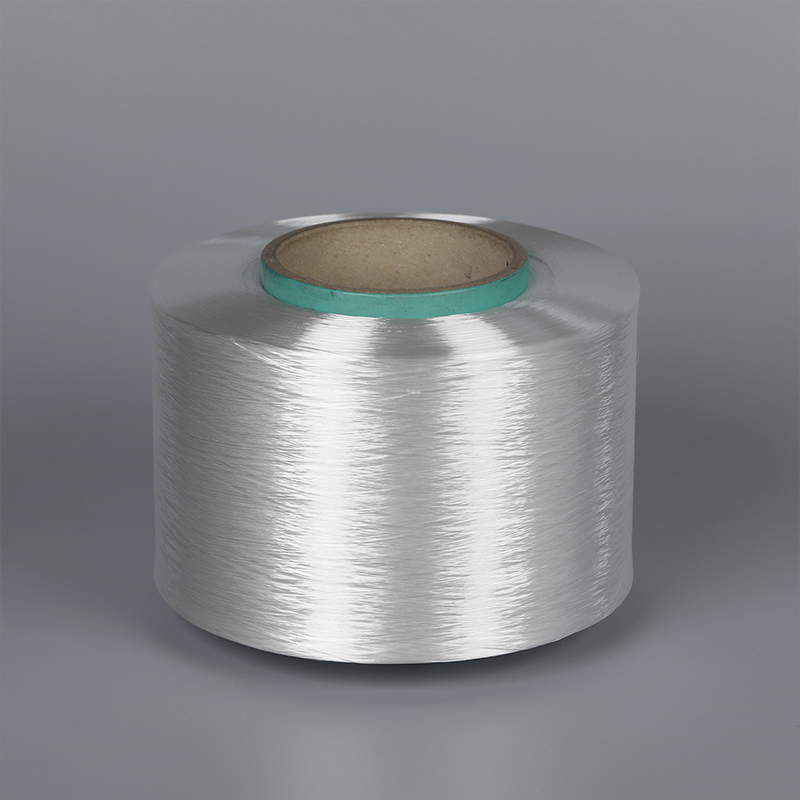
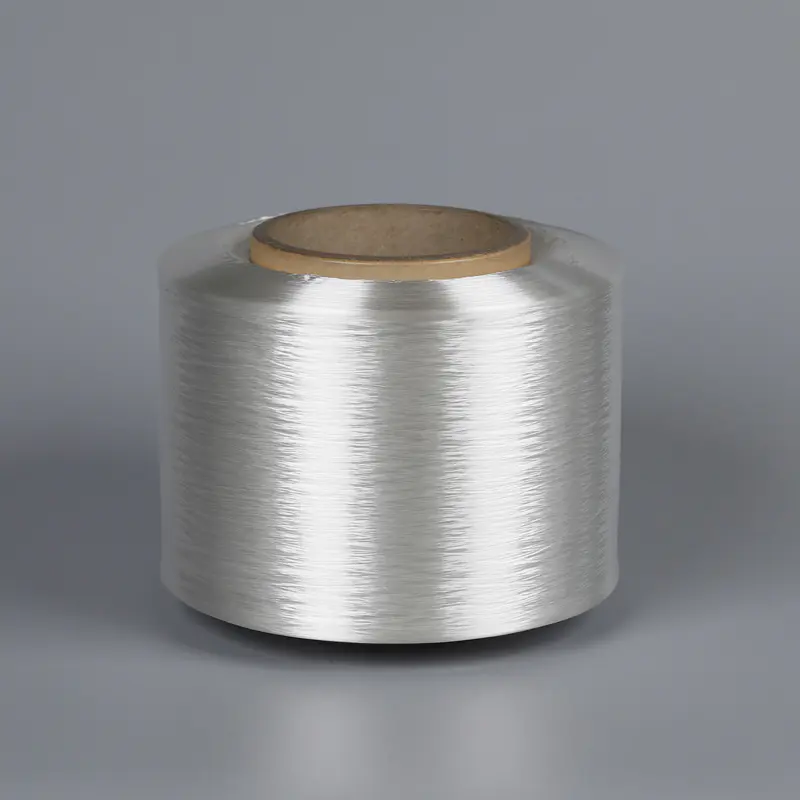
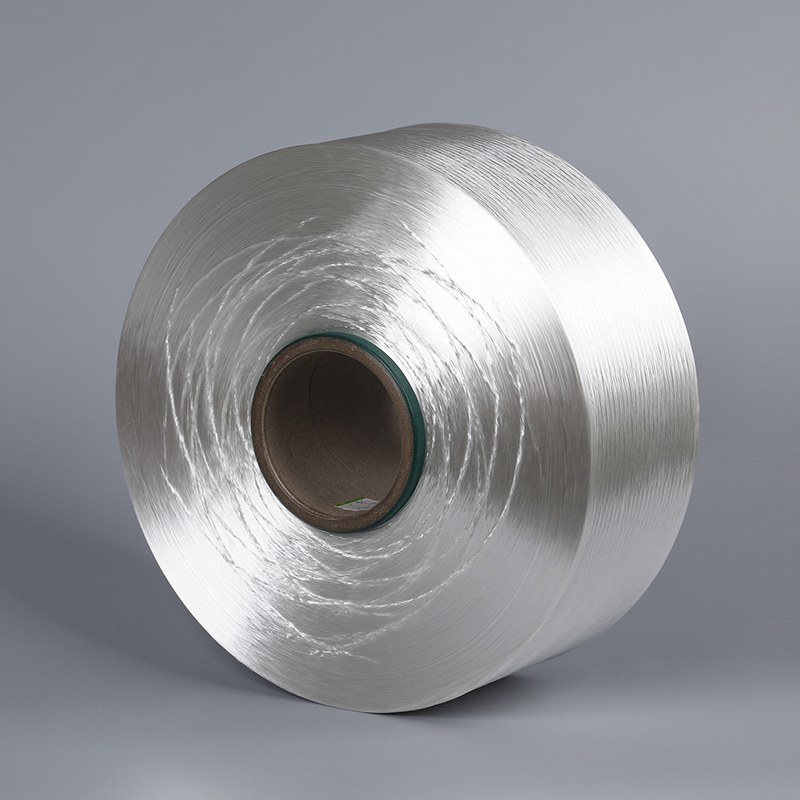
HDPE yarn, made from high density polyethylene, offers excellent strength, abrasion resistance, and chemical stability. It is commonly used in industrial fabrics, packaging materials, ropes, and applications requiring durability under demanding conditions.
Bi-component yarn consists of two different polymers combined within a single filament, typically in a sheath-core or side-by-side configuration. This structure allows the yarn to deliver combined properties such as bonding capability, softness, and dimensional stability in one material.
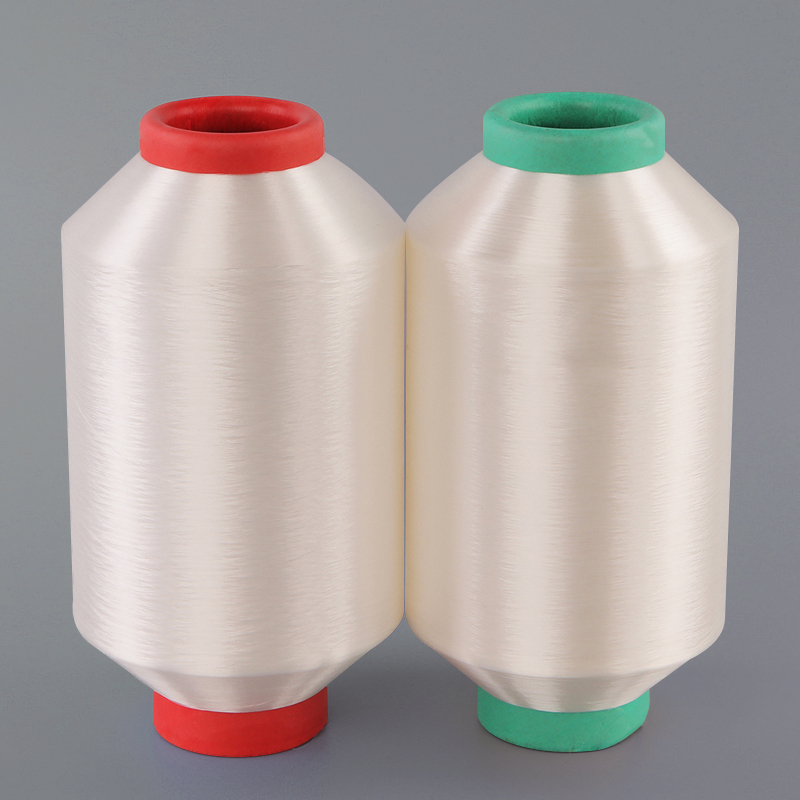
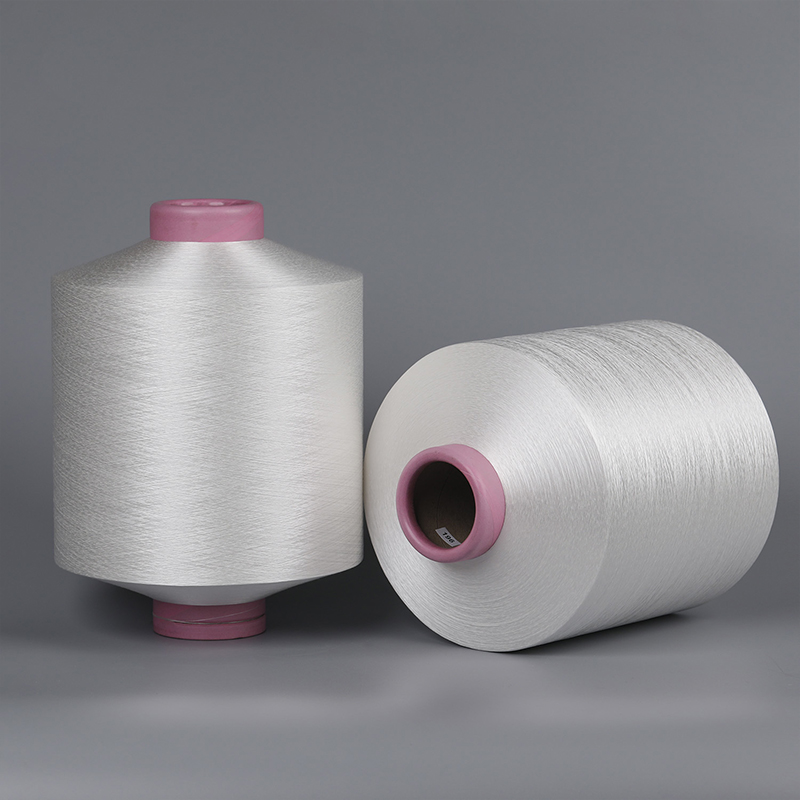
Polyester filament yarn remains one of the most widely used materials in textile manufacturing due to its strength, consistency, dyeability, and versatility. It serves as the foundation for countless applications across apparel, home textiles, and industrial fabrics, and is also used as a base for many specialty yarn developments.
The table below summarizes the main characteristics of each yarn category to help buyers quickly identify which product aligns with their technical requirements.
| Yarn Type | Main Features | Advantages | Typical Applications | Performance Characteristics |
| Biodegradable Yarn | Made from natural or modified biodegradable fibers | Reduces environmental footprint, supports sustainability goals | Eco apparel, disposable nonwovens, packaging textiles | Moderate strength, good processability, decomposes under suitable conditions |
| Low Melting Yarn | Lower melting point than standard polyester | Enables adhesive free thermal bonding, simplifies production | Nonwovens, padding, filtration materials, composite layers | Bonds at controlled temperatures, good fusion strength |
| ECDP Yarn | Elastic core with textured sheath | Built in stretch and recovery, soft handfeel | Stretch fabrics, sportswear linings, comfort textiles | High elongation, good elastic recovery |
| Anti Static Yarn | Contains conductive fiber components | Dissipates static charge, improves workplace safety | Workwear, cleanroom fabrics, electronics packaging | Stable conductivity, durable performance after washing |
| HDPE Yarn | High density polyethylene base | High abrasion resistance, chemical stability | Industrial fabrics, ropes, geotextiles, packaging | High tensile strength, low moisture absorption |
| Bi-component Yarn | Two polymers in sheath core or side by side structure | Combines multiple properties in one yarn | Nonwovens, technical fabrics, composite reinforcement | Customizable bonding and mechanical properties |
| Polyester Filament Yarn | Continuous filament structure, multiple deniers and finishes available | Versatile, consistent quality, good dyeability | Apparel, home textiles, industrial fabrics | Good tensile strength, stable dimensional performance |
For apparel applications, polyester filament yarn and ECDP yarn are commonly selected based on whether the priority is dimensional stability or stretch comfort. Anti static yarn may also be incorporated into functional clothing lines.
Home textile products such as curtains, upholstery, and bedding often use polyester filament yarn for its durability and consistent dyeability, with bi-component yarn used in certain bonded or layered structures.
Low melting yarn and bi-component yarn are essential in nonwoven manufacturing, providing thermal bonding capability that improves production efficiency and reduces the need for chemical adhesives.
HDPE yarn is preferred for industrial applications requiring high strength and chemical resistance, such as protective fabrics, packaging materials, and reinforcement structures.
Automotive interior components often combine bi-component yarn for bonding properties with polyester filament yarn for surface appearance and durability under repeated use.
Technical textile development frequently requires a combination of functional yarns, including anti static yarn for safety compliance and HDPE yarn for mechanical performance.
For sustainability focused projects, biodegradable yarn provides an environmentally responsible alternative without compromising essential processing characteristics.
Tensile strength determines how well a yarn withstands mechanical stress during weaving, knitting, and end use. Industrial applications such as HDPE yarn typically require higher strength specifications.
Durability reflects how a yarn performs under repeated use, abrasion, and environmental exposure. This is particularly important for automotive and industrial fabrics.
Elongation refers to how much a yarn can stretch before breaking. ECDP yarn is specifically engineered for higher elongation and recovery, making it suitable for stretch applications.
Dyeability affects color consistency and finishing quality. Polyester filament yarn generally offers stable and predictable dyeing results across different production batches.
Thermal bonding capability is critical for low melting yarn and bi-component yarn, allowing fabrics to be fused together using heat without additional binding agents.
Static control is essential in environments sensitive to electrical discharge. Anti static yarn maintains conductivity to safely dissipate built up charge.
Chemical resistance determines how a yarn withstands exposure to solvents, oils, and other substances, a key consideration for HDPE yarn used in industrial settings.
Environmental performance includes biodegradability, resource efficiency, and end of life impact, an increasingly important factor for biodegradable yarn and other sustainable yarn options.
The shift toward sustainable yarn solutions continues to influence raw material selection, with manufacturers exploring renewable and recycled inputs across multiple yarn categories.
Advancements in biodegradable fiber technology are improving the balance between environmental performance and processing reliability, expanding the use cases for biodegradable yarn.
Conductive and functional yarns, including anti static yarn variants, are increasingly integrated into smart textile development for wearable technology and sensor based fabrics.
Ongoing innovation in bi-component yarn and ECDP yarn structures continues to expand the range of properties achievable within a single yarn, supporting more complex technical textile designs.
Industrial yarn solutions such as HDPE yarn are being adapted for new high-performance applications, including advanced geotextiles and reinforcement materials.
Polyester filament yarn and ECDP yarn support a wide range of apparel constructions, from everyday garments to performance wear.
Durable and consistent yarn types are used across curtains, upholstery fabrics, and bedding products.
Bi-component yarn and polyester filament yarn contribute to automotive interior fabrics requiring durability and aesthetic consistency.
Low melting yarn and bi-component yarn support bonded structures used in certain medical textile applications.
HDPE yarn provides the strength and resistance required for heavy duty industrial fabric production.
HDPE yarn and bi-component yarn are commonly used in geotextile applications requiring long term durability.
Low melting yarn and bi-component yarn are foundational materials for thermal bonded nonwoven production.
Anti static yarn plays a critical role in protective clothing designed for hazardous or sensitive work environments.
The right yarn selection directly affects fabric appearance, hand feel, and overall product consistency.
Yarns such as low melting yarn and bi-component yarn can simplify manufacturing processes, reducing the number of production steps required.
Choosing a yarn that matches processing requirements helps avoid inefficiencies, material waste, and rework costs.
Incorporating biodegradable yarn or other sustainable yarn options supports broader environmental commitments without compromising production standards.
Ultimately, yarn selection determines how the finished product performs under real world conditions, from durability to comfort to safety compliance.
Functional yarn is engineered to provide specific performance characteristics, such as thermal bonding, elasticity, or static control, beyond the basic properties of standard yarn.
Yes, biodegradable yarn can be processed using standard textile equipment and is suitable for apparel applications where sustainability is a priority.
Low melting yarn allows fibers to bond together when heat is applied, eliminating the need for additional adhesives and simplifying the bonding process.
ECDP yarn combines an elastic core with a textured outer sheath, providing both stretch performance and a soft surface texture in a single yarn structure.
Anti static yarn is designed to maintain conductive performance through normal use and washing cycles, though performance may vary depending on fabric construction and usage conditions.
HDPE yarn is widely used in industrial fabrics, packaging, ropes, and geotextile applications due to its strength and chemical resistance.
Bi-component yarn combines properties from two different polymers, allowing manufacturers to achieve characteristics such as bonding capability and softness that a single polymer yarn cannot provide alone.
Yes, polyester filament yarn is versatile and is used across apparel, home textiles, and many industrial applications due to its strength and consistency.
Yarn selection depends on factors such as required strength, elasticity, bonding needs, environmental considerations, and the specific manufacturing process involved. Consulting with a technical team can help identify the best option.
Yes, most yarn categories are available in multiple denier ranges and can be supplied in raw white or dyed forms depending on application requirements.
Yes, many of our yarn categories can be adjusted in terms of composition, structure, and finishing to meet specific technical or performance requirements.
Buyers should look for relevant material certifications and documentation that verify biodegradability claims, recycled content, or other sustainability attributes depending on project requirements.
Samples can be requested directly through our technical team, who can recommend suitable yarn types based on your application before sample production.
Minimum order quantities vary depending on yarn type, specification, and customization level. Our team can provide specific details based on your requirements.
Yes, our technical team can provide guidance on processing parameters and integration considerations to help ensure smooth adoption of new yarn types.
Consistent quality across production batches is essential for maintaining reliable downstream processing and final product performance. An experienced manufacturer maintains strict quality control throughout production.
Deep technical knowledge of fiber properties, processing parameters, and application requirements allows for better guidance and more effective problem solving for buyers.
The ability to develop customized yarn specifications enables buyers to source materials that precisely match their product development goals.
Sufficient production capacity ensures reliable supply for both ongoing orders and scaling production needs.
A manufacturer with established export experience and logistics capability can support international buyers with consistent delivery and documentation standards.
If you are evaluating yarn options for a new project or looking to improve the performance of an existing product, our technical team is available to provide guidance based on your specific application requirements. We can assist with yarn recommendations, technical specifications, and sample arrangements to support your evaluation process.
Reach out to our team to discuss your project details and explore which functional yarn or specialty yarn solution best fits your manufacturing needs.
Please fill out the form below and our team will contact you as soon as possible.
Addres: No.66 Qiaogang Road, Haian, Nantong City, Jiangsu Province, China
E-mail: service@gcfiber.com admin@gcfiber.com
Copyright ? GC FIBER All Rights Reserved. OEM Functional Eco-Friendly Textile Yarn Supplier ODM Functional Eco-Friendly Textile Yarn Factory
