 English
 中文简体
中文简体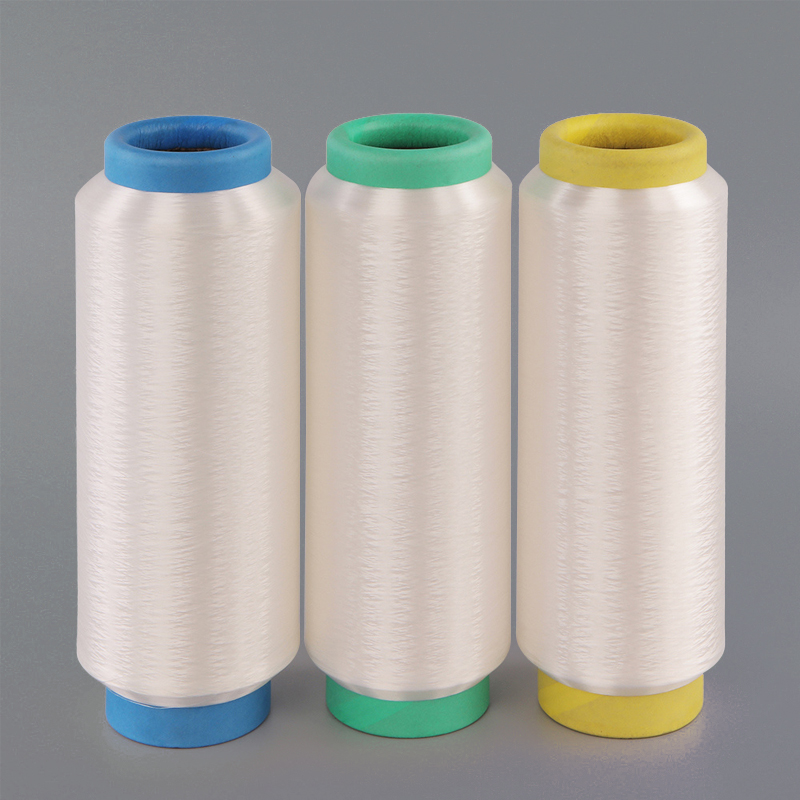
Spun polyester is easy to buy badly. A fabric can look correct on a sample card, then arrive with a softer hand, more hairiness, or faster pilling than the fil...
READ MORE
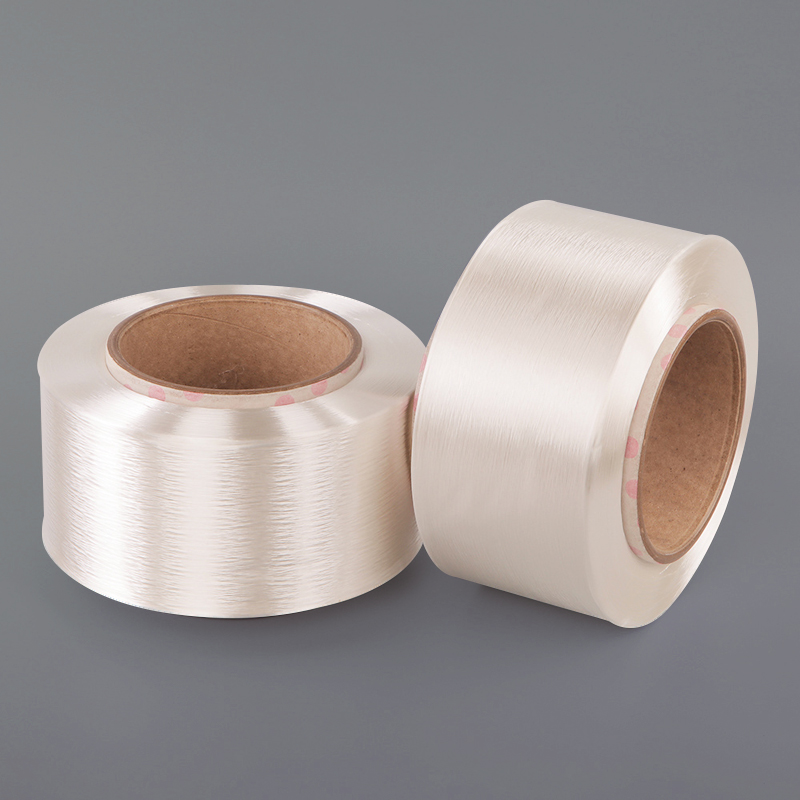
HDPE Yarn is made from High-Density Polyethylene — the world's most widely used plastic polymer. Its semi-crystalline, linear molecular structure (-CH2-CH2-) gives the fiber strength and toughness with excellent chemical resistance, in a lightweight thermoplastic form. Through specialized processing, we produce a low-shrinkage HDPE yarn with a naturally cooling touch and stable physical properties — designed for home textile and glove applications.
Key Features
1. Low Shrinkage
Minimizes dimensional change, helping finished products keep their shape through repeated use and washing.
2. Natural Cooling Touch
HDPE's molecular structure gives it an inherent cool-to-skin feel without chemical additives — ideal for summer bedding and comfort-driven textiles.
3. Stable Physical Properties
Consistent strength and toughness batch after batch, supporting predictable processing and finished-product quality.
4. Chemical Resistance & Durability
Strong resistance to chemicals, moisture, and wear — a key benefit for gloves exposed to liquids, oils, or industrial substances.
5. Lightweight, High Strength-to-Weight Ratio
Enables lighter fabrics and gloves without sacrificing durability.
Applications
Home Textile: bedding and cooling fabrics
Gloves: work and protective gloves

Spun polyester is easy to buy badly. A fabric can look correct on a sample card, then arrive with a softer hand, more hairiness, or faster pilling than the fil...
READ MOREA shipment of pure terephthalic acid can pass an assay check and still fail in a polyester spinning line. The lot may be 99.6% acid, yet a few ppm of 4-carboxy...
READ MORETwenty tonnes of yarn almost never fails because the polymer was wrong. It fails because the purchase order listed a denier and a colour but never the number t...
READ MOREA texturing mill that receives 150D/48F partially oriented yarn with elongation at break below 110% will spend the week chasing fuzz and broken filaments, howe...
READ MOREHDPE yarn is a high-density polyethylene monofilament or tape yarn prized for its strength-to-weight ratio, chemical resistance, and low cost, making it the standard choice for woven sacks, agricultural nets, ropes, and geotextiles. If you need a durable, moisture-proof, UV-stabilized yarn for industrial weaving, HDPE yarn is almost always the right answer over PP, nylon, or cotton alternatives.
HDPE yarn is produced by extruding high-density polyethylene resin into thin tapes or monofilaments, which are then stretched (oriented) to align the polymer chains. This orientation process increases tensile strength by 3 to 5 times compared to unoriented film. The result is a lightweight, glossy, and highly tear-resistant yarn typically supplied in deniers ranging from 800D to 2000D for woven applications.
Unlike PP yarn, HDPE yarn has a slightly higher density (around 0.95 g/cm3 versus 0.91 g/cm3 for PP), which translates into better stiffness and abrasion resistance for the same thickness.
| Industry | Typical Product | Why HDPE Yarn Is Used |
| Agriculture | Shade nets, mulch covers | UV resistance and lightweight handling |
| Packaging | Woven sacks, bulk bags | High burst strength and low cost |
| Construction | Geotextiles, scaffold netting | Abrasion resistance and durability |
| Marine | Ropes, fishing nets | Moisture resistance and floatability |
Start by matching denier to your end use. For light shade netting, 800D to 1000D is sufficient, while heavy-duty bulk bags often require 1400D to 2000D. Always check the tape width consistency, as variations over 0.2mm can cause uneven weaving and weak points in the final fabric.
Request a UV stabilizer dosage report if the product will be used outdoors. A masterbatch loading of at least 2 percent UV additive is generally needed to achieve a 12-month outdoor warranty. Finally, ask suppliers for a tensile test certificate showing breaking strength in grams per denier, not just total breaking load, since this allows direct comparison across different yarn thicknesses.
| Property | HDPE Yarn | PP Yarn | Nylon Yarn |
| Density | 0.95 g/cm3 | 0.91 g/cm3 | 1.14 g/cm3 |
| Tensile Strength | 4.5 to 6.5 g/d | 3.5 to 5.5 g/d | 5 to 7 g/d |
| Moisture Absorption | Under 0.01 percent | Under 0.05 percent | 3 to 4 percent |
| UV Resistance | Excellent with additives | Moderate | Poor without coating |
| Relative Cost | Low | Lowest | High |
For applications needing both strength and weather resistance at a moderate price point, HDPE yarn consistently outperforms PP in outdoor durability while remaining far more affordable than nylon.
Is HDPE yarn recyclable
Yes, HDPE yarn falls under recycling code 2 and can be reprocessed into pellets for non-food packaging or construction materials, making it a popular choice for sustainability-focused buyers.
What denier should I choose for woven sacks
Most 25kg to 50kg woven sacks use 1000D to 1200D HDPE yarn with a fabric weight of 90 to 120 grams per square meter, balancing cost and load capacity.
Does HDPE yarn fade in sunlight
Without UV additives, HDPE yarn can lose up to 50 percent of its tensile strength within 6 months of direct sun exposure. Adding 2 to 3 percent UV masterbatch extends this significantly.
Can HDPE yarn be dyed
Yes, color masterbatch is added during extrusion. Common colors include white, black, green, and blue, with custom Pantone matching available from most manufacturers at higher minimum order quantities.
Please fill out the form below and our team will contact you as soon as possible.
Addres: No.66 Qiaogang Road, Haian, Nantong City, Jiangsu Province, China
E-mail: service@gcfiber.com admin@gcfiber.com
Copyright ? GC FIBER All Rights Reserved. OEM Hdpe Yarn Supplier ODM PE Yarn For Mattress Factory
