English
 中文简体
中文简体Made of PBS (Polybutylene Succinate), fully biodegradable.Features:1.Home compostable2.Raw material: PBS Polybutylene Su...
READ MORE
Content
Polyester staple fiber (PSF) is a short-length fiber extruded from polyethylene terephthalate (PET) and cut into defined lengths, usually between 3 mm and 150 mm. Unlike filament yarn, which runs continuously, staple fiber behaves more like natural cotton or wool, which makes it easier to blend or card into a web.
The key point is that PSF combines the durability and quick-drying behavior of polyester with the processability of a discrete fiber. That is why it appears in everything from apparel yarn to nonwoven wipes, and why reading a specification sheet correctly can save a factory from trial-and-error batches. For a broader look at how polyester behaves when it becomes a fabric, see how polyester fiber compares as a fabric material.
Staple fiber and filament yarn both come from polyester, but they are not interchangeable. Filament yarn is a continuous thread, so it delivers smoothness, high strength, and a clean surface. Staple fiber is made of discrete short lengths, so it offers better thermal insulation, a more cotton-like hand feel, and easier blending with other fibers.
This distinction also changes the downstream equipment. A cotton-spinning mill can process PSF with the same blowroom and carding machines used for cotton, while a weaver or knitter normally requires textured or flat filament yarn. In practice, mills that produce spun yarn and woven fabric keep both staple fiber and filament categories in their raw material plan, but the choice of one over the other depends on the final hand feel and the production route available.
Two production routes dominate the market: virgin polymer and recycled polymer. The virgin route starts with purified terephthalic acid (PTA) and monoethylene glycol (MEG), which are polymerized into PET chips. The chips are melted, extruded through a spinneret, quenched, drawn, crimped, heat-set, and cut. The recycled route starts with clear PET bottles or post-industrial film, which are cleaned, flaked, melted, and then processed through the same spinning line.
From a buyer's perspective, both routes can deliver workable PSF. The important differences show up in consistency, dye uptake, and traceability:
PSF is graded by four main parameters: linear density, cut length, crimp, and tenacity. A mismatch in any one of these can change the hand feel, spinning efficiency, or bonding behavior.
| Parameter | Typical range | Why it matters |
|---|---|---|
| Fiber denier | 0.9 D to 15 D | Fine denier feels soft and drapes well; coarse denier adds stiffness and resilience. |
| Cut length | 32 mm to 150 mm | Cotton-spinning uses 38 mm; wool spinning uses 51-76 mm; nonwoven and fill use longer cuts. |
| Crimp level | 3-12 crimps per cm | Crimp creates bulk, elasticity, and fiber-to-fiber cohesion. |
| Tenacity | 3.0-6.5 cN/dtex | High tenacity suits industrial fabrics and sewing thread; medium tenacity is better for apparel comfort. |
Two other details are easy to overlook. Shrinkage below 3% is important for filling and nonwoven products that will be washed, while finish and oil content affect static control and processing speed on carding machines. Always match these values to your own line conditions instead of copying a generic datasheet.
When you send a PSF inquiry to a supplier, the following check list reduces misunderstanding and helps the mill quote a product that is right for the end use.
It is especially important to check the difference between high-tenacity and medium-tenacity fiber. High-tenacity PSF may be too stiff for bedding, while medium-tenacity fiber will not provide enough strength for industrial fabrics. Starting with a clear tolerance shows the supplier that you are serious about consistency.
Price is only one part of the decision. Recycled PSF is sustainable, but virgin PSF still offers better uniform dyeing and strength in many textile applications. The table below highlights the practical differences.
| Aspect | Virgin PSF | Recycled PSF |
|---|---|---|
| Consistency | High batch-to-batch stability | More variation; quality depends on flake sorting |
| Dyeability | Bright, reproducible shades | Duller shades; occasional dye spots |
| Strength | Predictable tenacity | Slightly lower if rPET content is high |
| Environmental impact | Higher carbon footprint | Lower footprint, diverts bottle waste |
| Typical cost | Higher | Lower, but volatile with bottle prices |
For spun yarn used in fashion, where shade consistency is everything, many mills still specify virgin fiber. For filling, wipes, and industrial nonwovens, recycled PSF is often a perfectly acceptable and more marketable choice.
PSF has been a workhorse fiber for decades because it can be engineered to many deniers and cross-sections. Instead of listing every niche, it is useful to think in terms of end-use structures.
The same polymer family also produces filament yarns for woven labels, ropes, and automotive fabrics, but the staple form is preferred whenever bulk, softness, or thermal bonding is required.
Standard PSF handles many jobs well, but it fails when the product must bond without glue, decompose after use, or prevent static buildup. Specialty polyester-based fibers fill those gaps.
If you produce thermal-bonded nonwovens, a low-melting fiber with a melting point around 110 °C can replace chemical binders and reduce formaldehyde emissions. Low-melting bicomponent fiber also improves compression recovery in padding products.
 Pure Polyester Low Melt Yarn with 110°C Melting PointThis low-melting polyester yarn activates at 110°C for thermal bonding, replacing chemical binders and reducing formaldehyde emissions in nonwovens while improving compression recovery in padding.View Product →
When your customer asks for a bio-based or biodegradable alternative, PLA staple fiber made from fermented plant starch is a realistic choice. It processes similarly to PSF, but it composts under industrial conditions without releasing toxic residues.
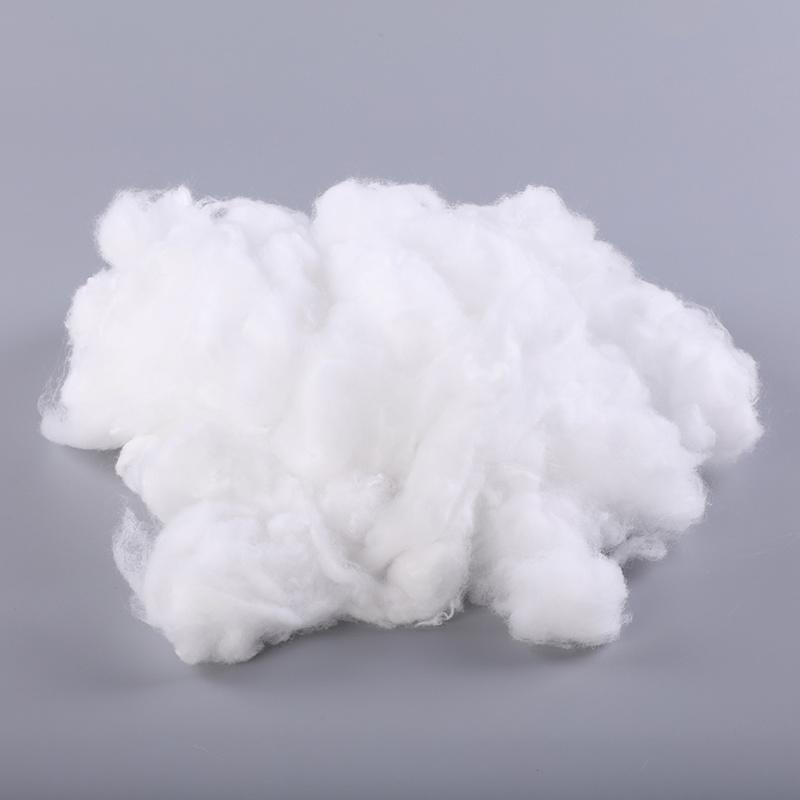 PLA Biodegradable Staple Fiber from Renewable Plant StarchA 100% bio-based alternative to polyester fibers, this PLA staple fiber composts industrially without toxic residues, making it suitable for products requiring full end-of-life degradation.View Product →
The final selection depends on the product’s lifetime. Low-melt polyester is still a durable thermoplastic; PLA is preferable when full end-of-life degradation is a requirement.
Once the specification is clear, choose a supplier based on process control instead of sample charm. A reliable supplier should provide a certificate of analysis for each batch covering denier, cut length, crimp, tenacity, elongation, and shrinkage. They should also confirm whether the fiber carries an eco-label such as GRS or OEKO-TEX.
Production capability matters just as much as documents. A manufacturer with dedicated lines for modified cross-sections, black or solution-dyed fiber, and antistatic treatments can save you from a later switch when a new order demands functions beyond commodity PSF. For example, if your end product is a woven or knitted safety garment, an antistatic polyester yarn can be combined with PSF in spinning or used directly in knitting.
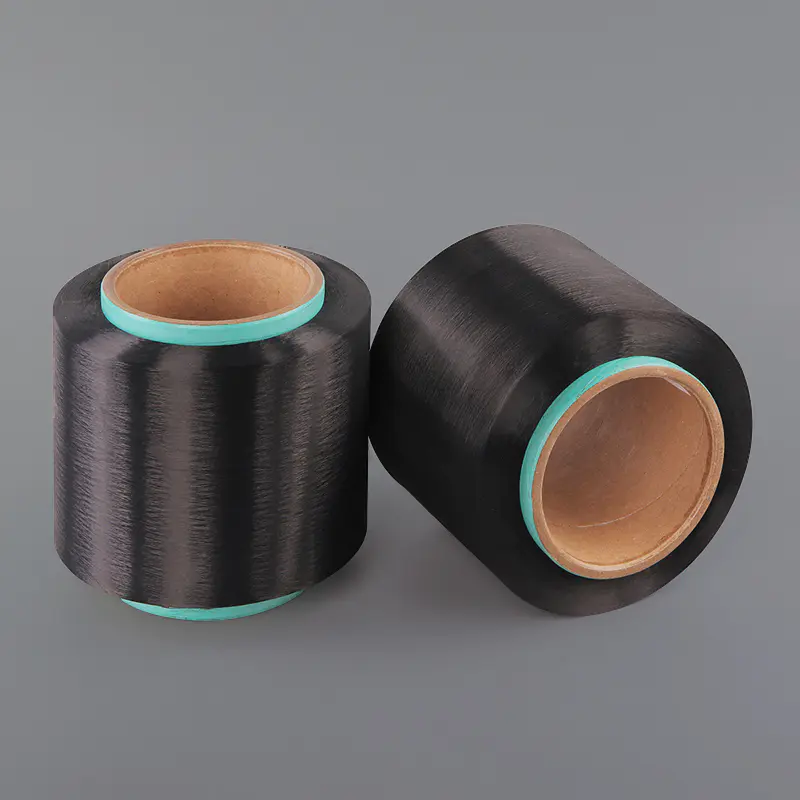 Anti-Static Polyester Yarn Black for Protective FabricsDesigned for cleanroom and anti-static workwear, this yarn maintains a resistance of 10⁶ Ω/cm, performs well across humidity levels, and ships reliably from Shanghai port.View Product →
Logistics can make or break a delivery. Fiber is bulky, so a factory near reliable ports and with stable raw material supply is preferable. Ask about the supplier’s production lead time, minimum order quantity, and how they audit quality during the extrusion, drawing, and cutting stages.
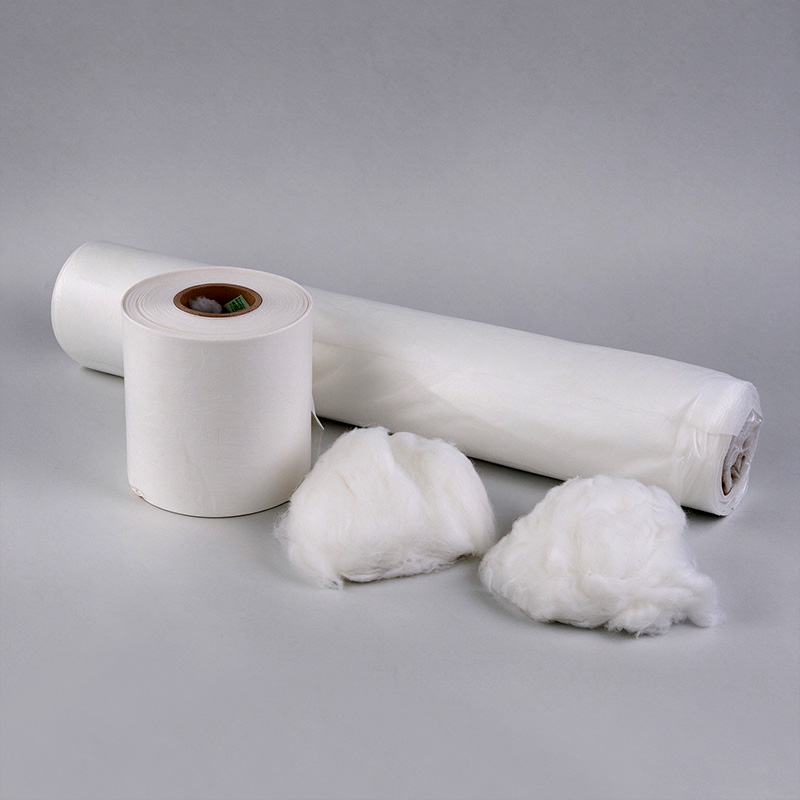
Made of PBS (Polybutylene Succinate), fully biodegradable.Features:1.Home compostable2.Raw material: PBS Polybutylene Su...
READ MOREPlease fill out the form below and our team will contact you as soon as possible.
Addres: No.66 Qiaogang Road, Haian, Nantong City, Jiangsu Province, China
E-mail: service@gcfiber.com admin@gcfiber.com
Copyright ? GC FIBER All Rights Reserved. Eco-Friendly Textile Products Manufacturer Biodegradable Yarn Company