English
 中文简体
中文简体It is made with Bio-base PLA, fully biodegradable Feature: 1. Industrial compost product 2. Made with PLA 3. Eco-frie...
READ MORE
Content
When you are choosing a yarn for a product that will face salt water, heavy friction, or months of humidity, polyester and nylon usually come up first in the discussion. Polypropylene yarn should be on that shortlist too. It is the lightest commodity synthetic fiber on the market, it absorbs almost no moisture, it resists a wide range of chemicals, and its price per kilogram sits well below nylon. Those advantages pull in the opposite direction from some important limitations: low heat tolerance, poor UV stability without additives, and almost no affinity for conventional dyes. The right way to choose polypropylene yarn is to start from the end use and work backward, not to start from the lowest quote.
Polypropylene yarn is a synthetic filament or staple fiber produced by melt-spinning isotactic polypropylene resin. In the extrusion process, the molten polymer is pushed through spinneret holes, cooled into filaments, and then drawn to orient the polymer chains into a structure that can carry load. Commercial production of PP yarn began in the late 1950s, and the fiber quickly spread through industrial textiles because it combined low cost, low density, and exceptional resistance to moisture and chemicals.
The same resin can be converted into several yarn forms: multifilament yarn for ropes, woven bags, and apparel; monofilament for screens, brushes, and filter elements; slit-film tape for heavy-duty packaging; and staple fiber for spun yarns and nonwovens. Within a filament yarn plant, the drawing and texturing route determines the product class, and the difference between partially oriented, fully drawn, and drawn textured yarn matters for downstream processing. If you often see these abbreviations on a datasheet, a summary of the differences between POY, FDY, and DTY yarns can help you translate a supplier's specification into the right process for your line.
Most buyers evaluate polypropylene yarn against a short list of measurable properties. The numbers below explain why the yarn behaves the way it does in real production.
| Property | Typical Value | Practical Impact |
|---|---|---|
| Density | 0.90–0.92 g/cm³ | Lightest major synthetic fiber; floats on water and lowers finished product weight. |
| Moisture regain | < 0.1% | Does not absorb water; dries quickly and keeps its strength when wet. |
| Tenacity | 3.5–8.0 g/d | Strong for its weight in ropes, nets, and industrial fabrics. |
| Melting point | 160–170 °C | Cannot withstand high heat; no hot ironing or high-temperature processing. |
| Chemical resistance | Excellent against most acids, alkalis, and organic solvents | Reliable for filtration, chemical packaging, and marine exposure. |
| UV resistance (unmodified) | Poor | Becomes brittle after prolonged sunlight; UV stabilizers are required for outdoor use. |
| Abrasion resistance | Good to very good | Handles friction in carpet backing, twine, and bag handling. |
Key consequence one: weight. Because the fiber is so light, a rope or bag of equal dimensions weighs roughly 30–35% less than one made from polyester. Key consequence two: static. Because PP is both hydrophobic and electrically insulating, static charge builds up quickly on its surface; clothing, filtration, and electronic-adjacent applications need a deliberate static-control strategy.
Polypropylene yarn appears across a wider range of industries than most fibers because no other material offers the same combination of low density, chemical resistance, and low cost.
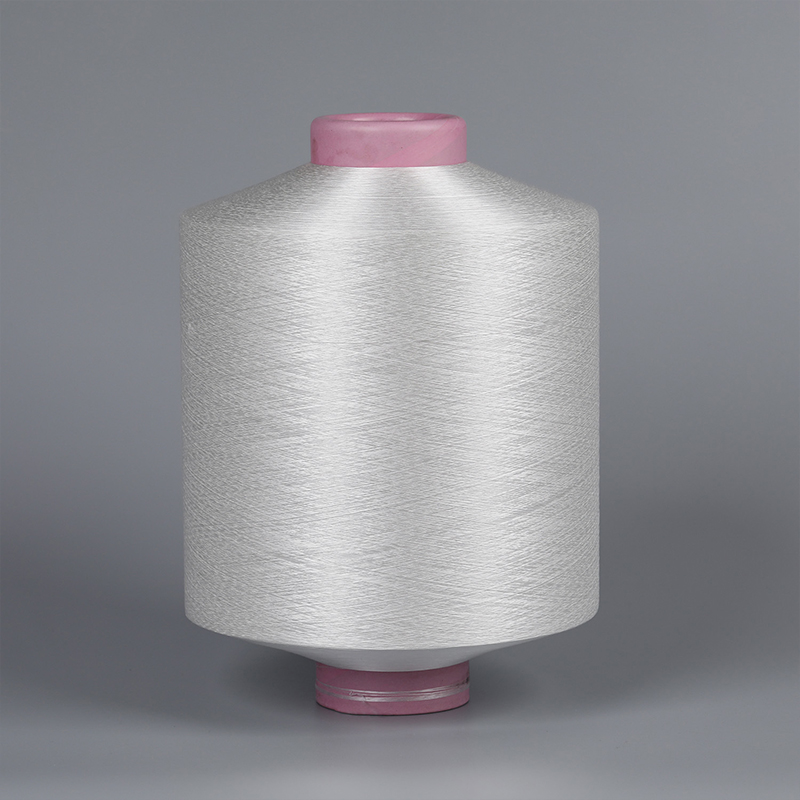 PE/PP Bicomponent Yarn with Cooling and Antibacterial FunctionsThis yarn combines polyethylene and polypropylene in one structure, offering cooling and antibacterial properties. Its low density and chemical resistance fit the earlier discussion on polypropylene versatility, making it a practical choice for industrial or apparel applications.View Product →
Three synthetic yarns cover most industrial and apparel needs, and each one has a clear set of strengths. A quick comparison explains why substitutions between them are rarely trouble-free.
| Property | Polypropylene (PP) | Polyester (PET) | Nylon (PA6/PA66) |
|---|---|---|---|
| Density (g/cm³) | 0.91 | 1.38 | 1.14 |
| Moisture regain (%) | < 0.1 | ~0.4 | ~4.5 |
| Melting point (°C) | 165 | 255 | 220 |
| UV resistance | Poor unless stabilized | Good | Moderate |
| Chemical resistance | Excellent | Good | Moderate |
| Dyeability | Poor; solution-dyed only | Good with disperse dyes | Good with acid dyes |
| Abrasion resistance | Good | Good | Excellent |
| Relative cost | Low | Medium | High |
Choose polypropylene when light weight, moisture resistance, chemical compatibility, and cost per cubic meter of final product are the main drivers. Choose polyester when the product sees strong sunlight, requires reliable dyeing, or needs a higher melting point for downstream finishing. Choose nylon when abrasion, elasticity, and toughness under repeated bending dominate the specification.
One common substitution pattern is replacing PP with a fine-denier polyester yarn in applications that need a more fabric-like hand. Polyester takes dye uniformly and offers a much wider range of counts and filament surfaces. For developers moving in that direction for clothing or interior textiles, the finer the filament, the softer the result.
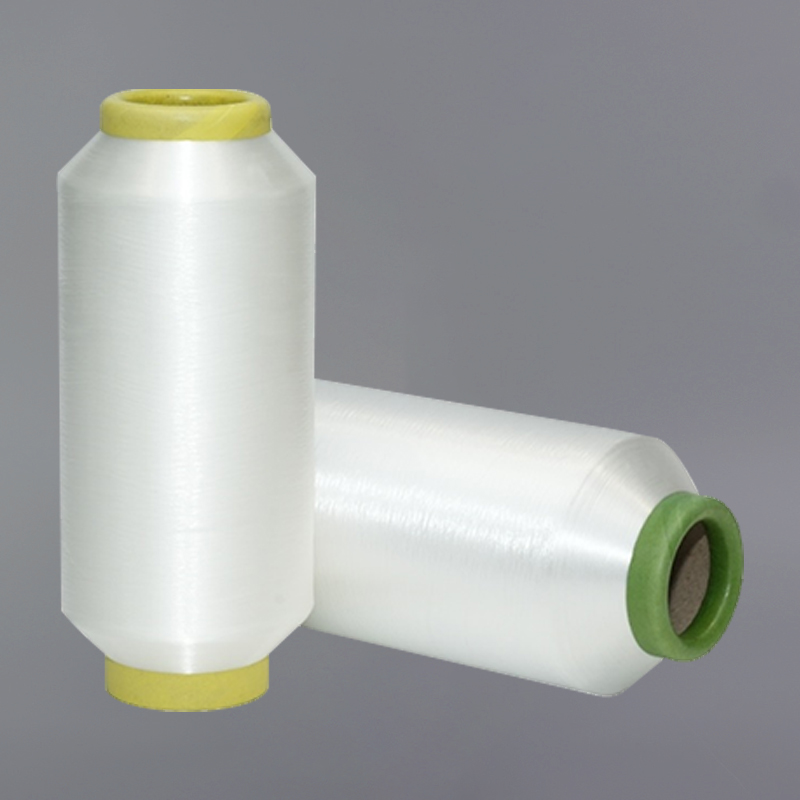 Polyester Micro Filament Yarn with Fine Denier per FilamentThis polyester micro filament yarn can be produced with DPF below 0.5, delivering a soft, fabric-like hand as referenced in the preceding discussion. It offers good tenacity, elastic resilience, and uniform dyeing, valuable when shifting from polypropylene to finer counts.View Product →
Polypropylene yarn costs little per kilogram, but a poorly specified yarn can become the most expensive part of your production line. Verify these five points with every supplier.
Polypropylene has no dye sites, so standard disperse or acid dyeing will not fix color to the fiber. As a result, most PP yarn is colored by feeding pigment masterbatch into the melt before spinning. Confirm the masterbatch system, the pigment loading, and the batch-to-batch tolerance your supplier is prepared to commit to. If your final products need a broad range of deep and saturated shades, a stretchable easy-dyeing polyester yarn is usually a simpler path.
Unstabilized PP yarn becomes chalky and brittle after a few months of outdoor exposure. If the end product will face direct sunlight for more than one season, specify a UV-stabilized grade with hindered amine light stabilizers (HALS), and ask for accelerated weathering test data rather than a verbal guarantee.
Because polypropylene is hydrophobic and electrically insulating, static charges accumulate on the yarn surface and can disrupt weaving, printing, or automated handling. In applications such as protective clothing, filtration, or electronic-related packaging, static control is a safety issue, not just a comfort issue. Additives and conductive compounds can be incorporated into the polymer, but when the requirement is a yarn that suppresses static reliably over the product's lifetime, a dedicated antistatic yarn is easier to validate. An introduction to antistatic yarn and how it works explains the main construction routes.
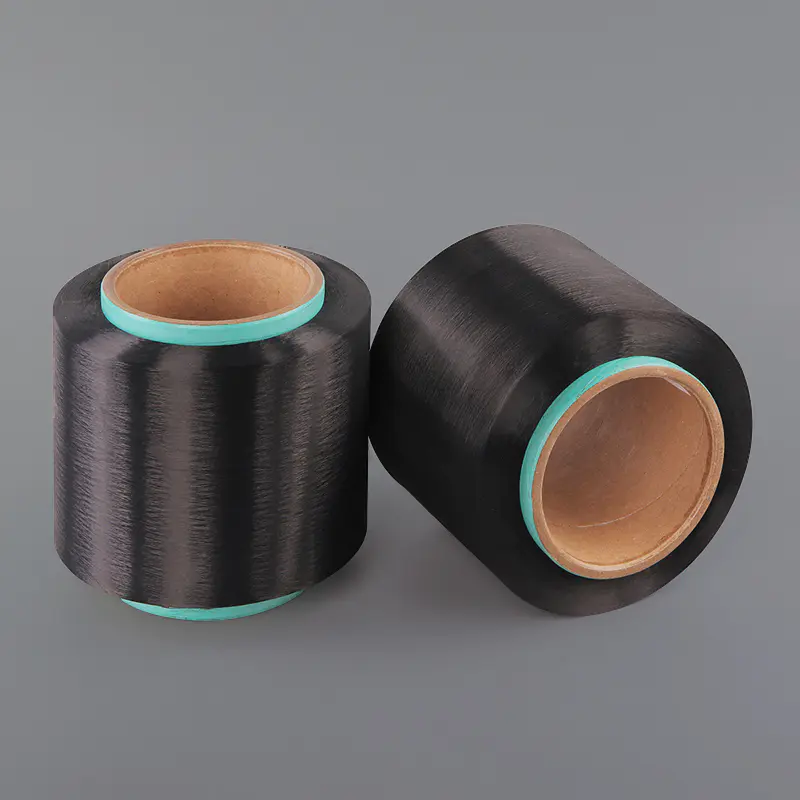 Antistatic Polyester Yarn in Black for ESD-Sensitive UsesThis black polyester yarn maintains a resistance of 10⁶ Ω/cm, providing reliable static control for workwear, protective fabrics, and automotive interiors. It directly addresses the antistatic yarn explanation above, offering a durable solution where polypropylene's static buildup is a safety concern.View Product →
With a melting range of roughly 160–170 °C, PP yarn will lose its structure in any process above that window. Hot ironing, high-temperature dyeing, steam setting, and aggressive drying conditions are all off-limits. If your existing finishing line runs at temperatures that suit polyester, a PP substitution will require a cooler, shorter process.
Linear density, tenacity, elongation, shrinkage, and oil finish content can all vary between production runs. A supplier that performs inline and laboratory checks on every lot should be able to provide a certificate of analysis with parameters that match your specific application, not a generic datasheet.
Polypropylene yarn is a genuinely impressive engineering fiber when its limits are respected. The projects that fail with PP are usually the ones where the buyer treated it as a drop-in replacement for polyester or nylon without adjusting the color route, the UV package, or the process temperature. When those adjustments are made, polypropylene delivers a combination of lightness, moisture resistance, and cost efficiency that no other commodity fiber matches.
Working directly with a specialty manufacturer that controls its own melt-spinning line helps close the gap between datasheet and production reality. You can specify the exact tenacity, filament count, color system, and test requirement, and receive samples that represent what regular production will look like. That is the difference between buying a yarn and building a reliable supply chain around it.
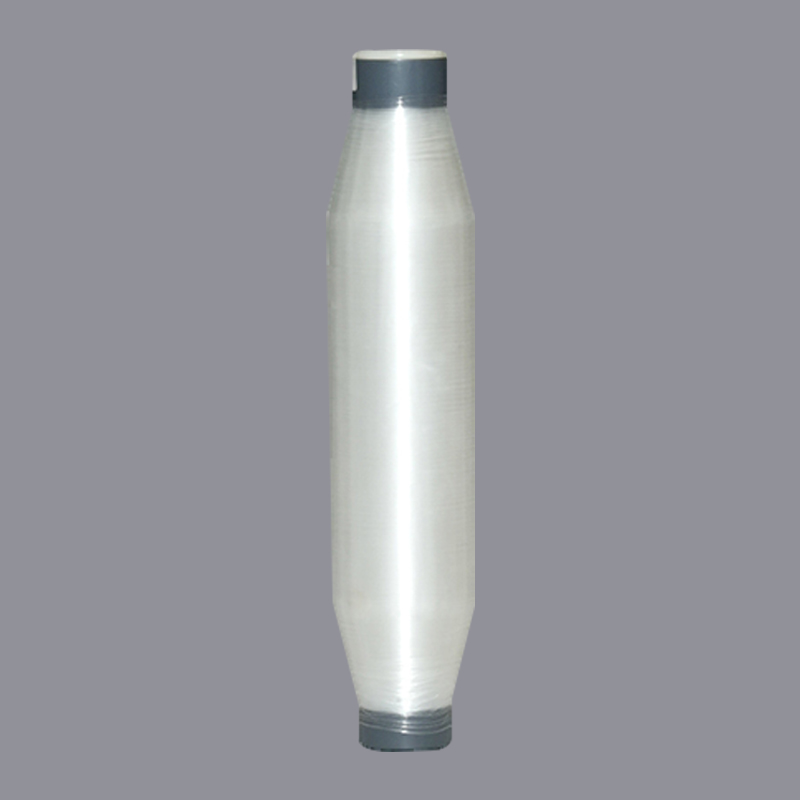
It is made with Bio-base PLA, fully biodegradable Feature: 1. Industrial compost product 2. Made with PLA 3. Eco-frie...
READ MOREPlease fill out the form below and our team will contact you as soon as possible.
Addres: No.66 Qiaogang Road, Haian, Nantong City, Jiangsu Province, China
E-mail: service@gcfiber.com admin@gcfiber.com
Copyright ? GC FIBER All Rights Reserved. Eco-Friendly Textile Products Manufacturer Biodegradable Yarn Company