English
 中文简体
中文简体It is made with Bio-base PLA, fully biodegradable Feature: 1. Industrial compost product 2. Made with PLA 3. Eco-frie...
READ MORE
Content
In the modern textile industry, HDPE Yarn and traditional yarns (such as cotton yarn, polyester yarn, etc.) each have their unique characteristics and applications. HDPE Yarn, with its excellent physical properties, durability, and corrosion resistance, is gradually replacing traditional yarns, especially in environments that require long-term use, high-temperature resistance, or chemical corrosion resistance. Compared to traditional yarns, HDPE Yarn shows significant advantages in various areas, particularly in the production of household textiles and gloves.
HDPE Yarn is a fiber made from polyethylene (PE) material processed through high-density technology. Its superior performance makes it an ideal choice in many industries.
HDPE Yarn has extremely high tensile strength, which is several times stronger than traditional yarns (such as cotton yarn and polyester yarn). For example, HDPE yarn's tensile strength is more than twice that of cotton yarn, making it capable of withstanding high-load environments without breaking. Additionally, HDPE yarn is lightweight, providing high comfort even in applications where long-term wear or use is required.
Another significant advantage of HDPE yarn is its corrosion resistance. Compared to traditional cotton yarn, HDPE yarn can resist acid, alkali, saltwater, and other chemical substances, making it especially suitable for use in marine, chemical transport, and highly corrosive environments. Its corrosion resistance makes it widely used in fishing nets, security ropes, industrial filters, and other fields.
HDPE Yarn can withstand temperatures up to 120°C, while traditional yarns such as cotton yarn and polyester yarn tend to degrade at high temperatures, leading to a loss of performance. Additionally, HDPE yarn remains stable at low temperatures, unlike cotton yarn, which becomes brittle or breaks.
Due to its durability, comfort, and high strength, HDPE yarn is commonly used in the production of household textiles and gloves. HDPE Yarn has a good touch and durability, making it suitable for long-term use in gloves, sportswear, kitchen accessories, and more. It not only provides the necessary protective functions but also withstands high temperatures and pressures, adapting to a variety of environments.
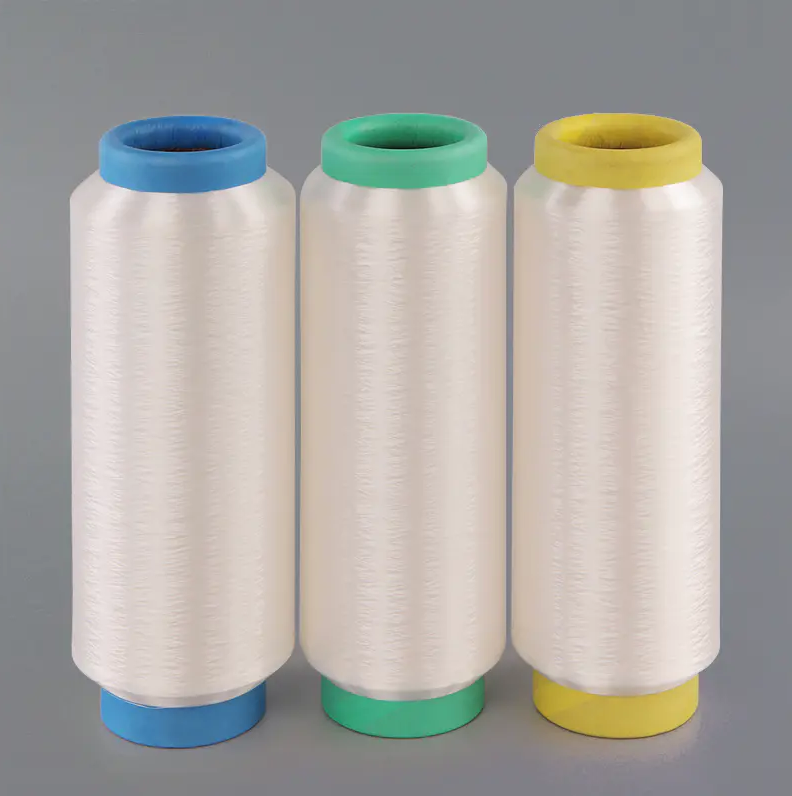
Traditional yarns like cotton yarn and polyester yarn still dominate in certain applications, but they have limitations when compared to HDPE yarn.
Traditional yarns, especially cotton yarn, have lower tensile strength and are prone to breaking under significant tension or friction. While polyester yarn has higher strength, it still does not match the tensile strength of HDPE yarn. For applications requiring high strength and long-term use, traditional yarns often suffer from durability issues.
Cotton yarn has high absorbency, meaning it swells, shrinks, or deforms in humid environments. Moreover, traditional yarns are poorly resistant to chemical erosion, easily degrading and becoming damaged. As a result, traditional yarns have a shorter lifespan in harsh environments.
Traditional yarns like cotton and polyester often degrade or melt in high-temperature environments, limiting their use in some high-temperature operations or long-duration welding tasks.
The following table clearly outlines the major differences between HDPE yarn and traditional yarn:
| Property | HDPE Yarn | Traditional Yarn (e.g., Cotton Yarn, Polyester Yarn) |
| Tensile Strength | High,The tensile strength is more than twice that of cotton yarn | Low, easily wears and breaks |
| Corrosion Resistance | Excellent, resistant to acids, alkalis, saltwater, etc. | Poor, susceptible to chemical erosion |
| High-Temperature Resistance | Good, can withstand high temperatures (up to 120°C) | Poor, prone to degradation at high temperatures |
| Abrasion Resistance | Strong, suitable for high-load and friction applications | Moderate, wears easily under high load |
| Absorbency | Extremely low, almost no water absorption | High, prone to deformation and shrinkage |
| Applicable Environments | Extreme, humid, marine environments | Regular environments, suitable for daily use and low-load situations |
HDPE Yarn is widely used in many fields, particularly in environments that require high strength, corrosion resistance, and high-temperature resistance. Below are several common application areas:
HDPE Yarn, compared to traditional yarns, has significant advantages, especially in terms of strength, corrosion resistance, high-temperature resistance, and durability. For applications requiring long-term work or use in harsh environments, HDPE yarn is undoubtedly an ideal choice. Whether in the fishing industry, industrial filtration, household textiles, or glove production, HDPE Yarn, with its outstanding performance, has broad application prospects in these industries.
It is made with Bio-base PLA, fully biodegradable Feature: 1. Industrial compost product 2. Made with PLA 3. Eco-frie...
READ MOREPlease fill out the form below and our team will contact you as soon as possible.
Addres: No.66 Qiaogang Road, Haian, Nantong City, Jiangsu Province, China
E-mail: service@gcfiber.com admin@gcfiber.com
Copyright ? GC FIBER All Rights Reserved. Eco-Friendly Textile Products Manufacturer Biodegradable Yarn Company