English
 中文简体
中文简体It is made with Bio-base PLA, fully biodegradable Feature: 1. Industrial compost product 2. Made with PLA 3. Eco-frie...
READ MORE
Low Melting Yarn is mainly used in hot-melt, composite, and bonding processes, enhancing textile processing efficiency and product performance. Although its core characteristic is a low melting point, in practical applications it is often combined with Anti Static requirements. Therefore, OEM Anti Static yarn is frequently used together in composite fabrics, non-woven fabrics, and functional textiles to provide additional static safety and stability for products.
In non-woven fabric manufacturing: Low Melting Yarn can act as a bonding layer: the yarn melts during the hot-melt process to fix the fiber structure, improving overall strength; it can be combined with Anti Static yarn to reduce static accumulation. Applications include masks, wet wipes, filtration materials, and industrial wipes.
In composite fabric production: Low Melting Yarn serves as adhesive yarn: it connects different fiber materials, maintains fabric softness and stability, and provides local structural support and shape retention.
Low Melting Yarn is often used for local reinforcement or shape stabilization in clothing and home textiles: bonding linings in garments; partial hot-press fixation of duvet covers or bedsheets; reinforcement of collars, cuffs, and other structures. Combined with OEM Anti Static yarn, it reduces static attraction and improves wearing comfort.
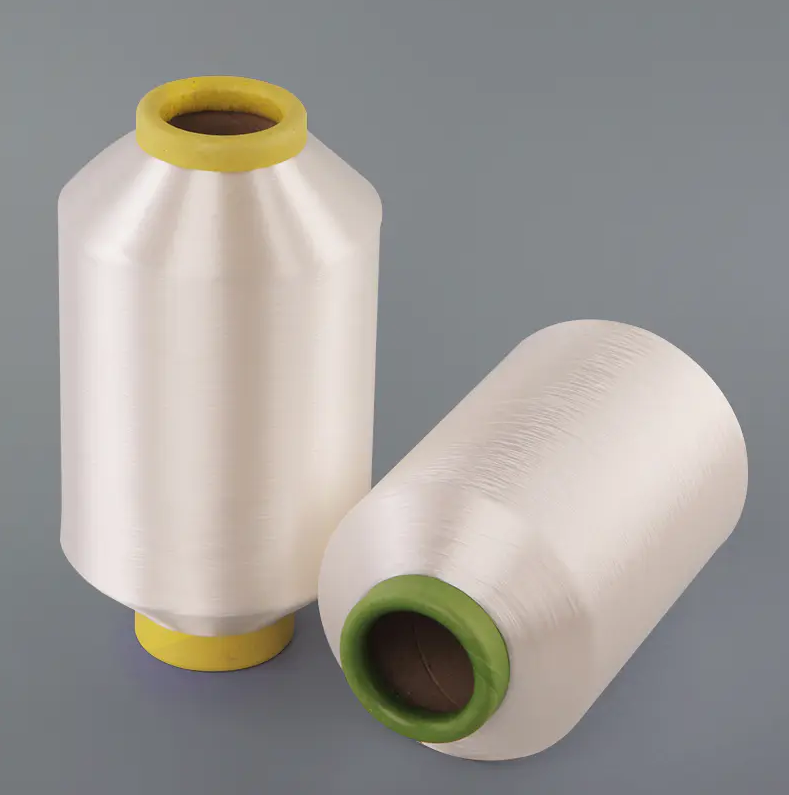
In industrial and professional settings: Low Melting Yarn provides structural reinforcement and processing convenience: industrial filtration materials; technical protective clothing or medical protective suits; packaging materials and filter fabrics; local hot-melt joining or seamless processing. When combined with Anti Static functionality, it prevents static accumulation during operation, reducing risks to precision equipment or flammable environments.
Functional yarn composite applications: Low Melting Yarn + Anti Static yarn = hot bonding with Anti Static properties; suitable for high-safety environments such as electronic industry fabrics and protective textiles; retains softness and Anti Static characteristics after heat-press forming; improves product safety and service life.
Choosing Low Melting Yarn offers clear advantages: Customizable melting point temperature: suitable for different processing methods;Variety of specifications: fiber diameter, yarn density, and composition can be adjusted as needed;Functional combination: can integrate Anti Static, flame-retardant, or dyeing performance;Processing efficiency improvement: fast hot-melt bonding without additional adhesives
Selection recommendations: Clarify the product processing method (hot pressing, hot-melt, composite, etc.);Ensure yarn melting point matches processing temperature;Decide if Anti Static functionality is required based on the application environment;Consider yarn specifications and textile softness requirements;Prefer suppliers with quality certification and strong OEM customization capability
Low Melting Yarn is not only a key material for bonding and composite applications but can also be combined with OEM Anti Static yarn to enhance product safety and stability. It has broad applications in non-woven fabrics, composite fabrics, home textiles, garments, and industrial textiles, achieving structural fixation through hot-melt processes while also providing Anti Static, durability, and comfort features, offering reliable protection for high-performance textiles.
It is made with Bio-base PLA, fully biodegradable Feature: 1. Industrial compost product 2. Made with PLA 3. Eco-frie...
READ MOREPlease fill out the form below and our team will contact you as soon as possible.
Addres: No.66 Qiaogang Road, Haian, Nantong City, Jiangsu Province, China
E-mail: service@gcfiber.com admin@gcfiber.com
Copyright ? GC FIBER All Rights Reserved. Eco-Friendly Textile Products Manufacturer Biodegradable Yarn Company