English
 中文简体
Made of PBS (Polybutylene Succinate), fully biodegradable.Features:1.Home compostable2.Raw material: PBS Polybutylene Su...
READ MORE
Content
A shipment of pure terephthalic acid can pass an assay check and still fail in a polyester spinning line. The lot may be 99.6% acid, yet a few ppm of 4-carboxybenzaldehyde or a small color shift can push chip shade and filter pressure outside the window. That is why PTA buying decisions should be based on the full impurity and handling profile, not a single purity number. The practical test is simple: can this lot repeat your polymerization, spinning, and yarn color performance without extra adjustment? If not, the headline purity is not worth the discount.
Pure terephthalic acid, usually shortened to PTA, is an aromatic dicarboxylic acid supplied as a white crystalline solid. It has low vapor pressure under normal conditions and very limited solubility in water. Industrial PTA is made by oxidizing p-xylene in acetic acid, then purifying the crude product through hydrogenation, crystallization, and drying. The word “pure” separates PTA from crude terephthalic acid, or CTA, which carries higher levels of 4-CBA and color-forming impurities.
PTA is not polyester. It is one of the two main monomers used to make polyethylene terephthalate; monoethylene glycol, or MEG, is the other. In PET polymerization, PTA and MEG react through esterification and polycondensation to form the polymer chain. Most PTA worldwide goes into PET for polyester fiber, film, and bottle resin. For a fiber plant, PTA is therefore not a background chemical. It is the acid half of the polymer and a direct input to color, viscosity, and spinning stability.
Assay is the easy number to quote. 4-CBA is the commercial number. It is a partial oxidation intermediate that remains if purification is incomplete. In PET polymerization, 4-CBA can interfere with chain growth and contribute to yellowing. A difference of a few ppm can matter more to final chip color than a tenth of a percent in assay, especially in bright, white, or fine-denier yarns where shade variation is easy to see.
Color is usually controlled through optical density, b* value, or a combination of powder and solution color tests. Two PTA lots can both look white in a bag and still behave differently after melting. One may produce a neutral chip; the other may need optical brightener or dye adjustment. Bottle-grade PTA often demands tighter color and lower 4-CBA than fiber-grade material, but fiber grade is not a loose category. For fine filament, the acceptable window is narrow because color bodies and undissolved particles can show up as spin breaks, filter pressure rise, or shade drift.
The conversion path is straightforward in principle: PTA plus MEG feeds esterification, then polycondensation, then PET chip or melt, then spinning. In practice, small upstream variations appear downstream in several places. Intrinsic viscosity may drift. Color may shift. Filtration pressure may climb faster. Break rates may rise during spinning or drawing. The yarn route matters as well, because POY, FDY, and DTY expose the polymer to different heat and tension histories. A useful primer on those differences is available in this guide to POY, FDY, and DTY yarns.
In specialty polyester yarn production, the same logic applies with less room for error. Microfilament yarns use fine dpf, so particle count and color consistency become more visible. A polyester micro filament yarn may show upstream issues as broken filaments or dullness rather than a simple lab number. 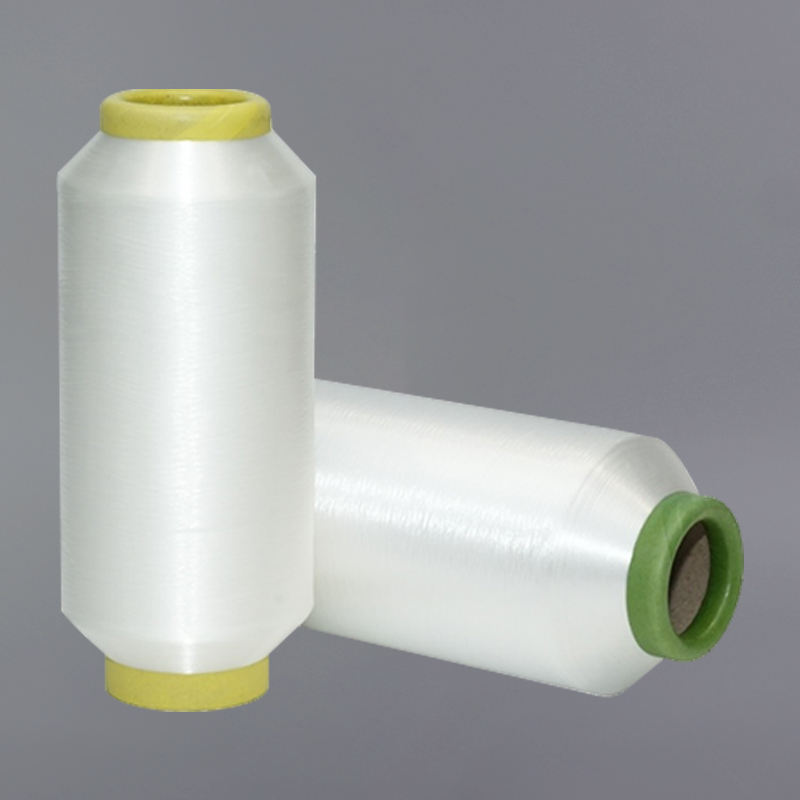 Custom Polyester Micro Filament DTY YarnFine-denier DTY with ultra-micro filaments below 0.5 dpf, soft hand-feel and strength for lightweight apparel where upstream consistency matters.View Product →
Easy-dye and modified polyester yarns add another layer. ECDP yarns are designed for lower dyeing temperature and good color development, but they still depend on a consistent PET base. If PTA color or 4-CBA varies, the dyer may compensate with process changes that reduce the intended energy or shade benefit. 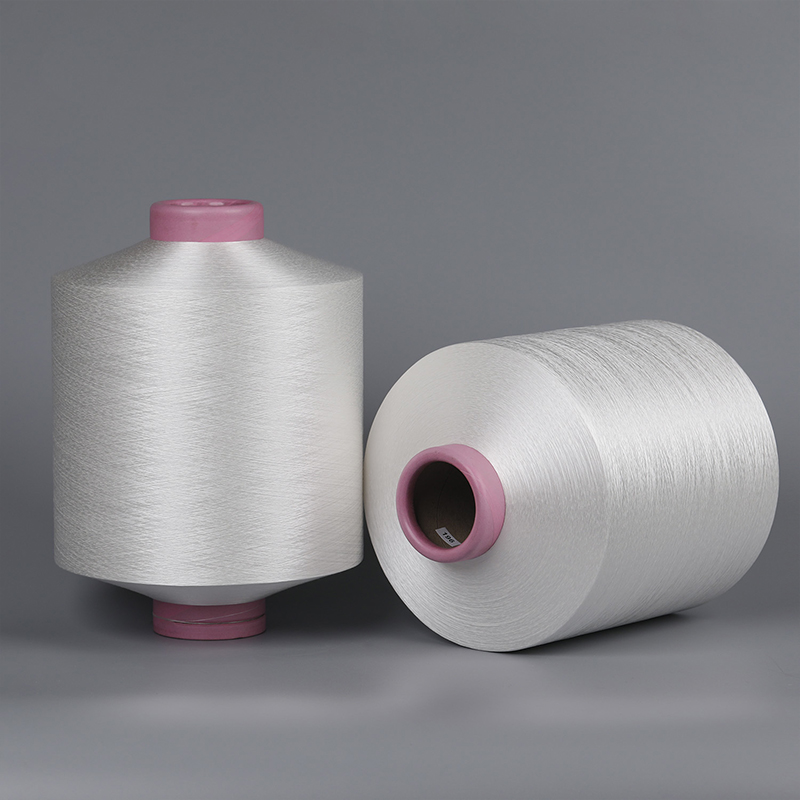 ECDP Textured DTY Polyester YarnModified polyester DTY for deep, even dyeing at 85°C, suited to spandex blends and soft, colorful knit or woven fabrics.View Product →
Low-melting polyester yarns bring a thermal bonding function into the fiber itself. The melting window is part of the product promise, so upstream polymer consistency supports bond strength and process repeatability, not just appearance.  Low-Melt Polyester Bonding Yarn 110°CThermofusible 100% polyester yarn that softens near 110°C to bond fabrics without added adhesives, available in multiple counts.View Product →
A certificate of analysis is a starting point, not proof of process capability. The table below groups the checks that usually deserve attention before a PTA lot is released to production. Actual limits should be agreed in the purchase specification and confirmed against lot history, not copied from another plant.
| Parameter | Why it matters | What to request |
|---|---|---|
| Assay and purity | Confirms acid content and charge balance; a low assay shifts the PTA-to-MEG ratio. | CoA, moisture-corrected assay, and lot trend data. |
| 4-CBA | A partial oxidation residue linked to yellowing and polymerization interference. | ppm limit, test method, optical density data, and independent verification when risk is high. |
| Color | Predicts chip and yarn shade; visual whiteness alone is not a specification. | b* value and L* value with agreed method, plus solution or powder color where relevant. |
| Moisture | Affects weighing accuracy, esterification, and hydrolysis risk during storage. | Karl Fischer result, packaging barrier, and container or silo history. |
| Ash and metals | Residual metals can affect color, catalyst behavior, and polymer quality. | Ash limit, metal report, and detection method, especially for critical bright yarns. |
| Particle size and fines | Influences dissolution, feeding stability, dust generation, and pneumatic handling. | Sieve data, fines limit, bulk density, and handling trial results. |
PTA is stable under normal storage, but it is not maintenance-free. Keep it dry, protected from contamination, and away from strong oxidizers. Bulk silos and jumbo bags both work, provided the plant controls condensation and dust. In humid climates, a cold container opened in a warm room can create moisture migration. Check liner condition, seals, and lot labels before unloading. Dust control matters for housekeeping as well as product purity; fines that become airborne can settle on equipment and affect feeding consistency.
Supply risk is usually commercial rather than chemical. PTA is a large-volume commodity, so turnaround schedules, freight cycles, and contract pricing can move more than the technical specification. Buyers should still track lot-to-lot variation, because a lower price per ton can disappear quickly if the plant has to slow spinning, adjust color, or reject finished yarn. For imported material, packaging, seal integrity, and moisture protection during ocean transit are part of the quality system, not just logistics.
Do not compare suppliers on a single CoA. Ask for twelve months of lot data and look at the spread, not only the average. A supplier with a slightly higher mean 4-CBA but tight control may be safer than one with a better isolated certificate and wide variation. Review the purification and drying steps during an audit. Confirm that the test methods match your lab. Then run a small polymerization or spinning trial with the actual lot, because PTA behavior depends on the whole formulation and process.
Total cost should include moisture, fines, packaging, freight, and payment terms. A product that is easy to unload and consistent in the silo can be worth more than a lower headline price. For specialty yarn development, it is also worth asking whether the PTA-derived polymer can support the target shade, dyeing route, and physical properties before the first bulk order. Consistency beats a perfect certificate.
This sequence takes more work than comparing assay figures, but it catches the failures that appear after the truck leaves. If you are sourcing PTA-derived polyester or functional yarns, speak with our team about the target yarn route and the upstream specification window that fits it.
Pure terephthalic acid is a defined industrial chemical, but its commercial value depends on consistency. The useful questions are not limited to “How pure is it?” They include “How low is 4-CBA?”, “How stable is color?”, “How much moisture can the packaging tolerate?”, and “What happens to filter pressure after ten lots?” A PTA grade that fits one PET line may be marginal in another, especially when the output is fine filament or a modified polyester yarn.
For buyers, the safest position is a specification tied to the final yarn, supported by lot data and a trial run. For yarn producers, the same logic explains why upstream PTA quality is part of product development, not only purchasing. When the polymer base is repeatable, color, spinning, and bonding processes become easier to control, and the yarn specification means what it says.
Made of PBS (Polybutylene Succinate), fully biodegradable.Features:1.Home compostable2.Raw material: PBS Polybutylene Su...
READ MOREPlease fill out the form below and our team will contact you as soon as possible.
Addres: No.66 Qiaogang Road, Haian, Nantong City, Jiangsu Province, China
E-mail: service@gcfiber.com admin@gcfiber.com
Copyright ? GC FIBER All Rights Reserved. Eco-Friendly Textile Products Manufacturer Biodegradable Yarn Company