 English
 中文简体
中文简体Feature:
1. High tenacity and easy rewind
2. 110 degree melting point
3. Bonding agent
Sheath-core cross section

A sourcing manager recently asked us whether switching a standard polyester yarn to a recycled polyester yarn would make her collection sustainable. Our answer was not a simple yes or no. Recycled polyester is a meaning...
READ MOREWhen you are choosing a yarn for a product that will face salt water, heavy friction, or months of humidity, polyester and nylon usually come up first in the discussion. Polypropylene yarn should be on that shortlist to...
READ MOREWhat Is Polyester Staple Fiber? Polyester staple fiber (PSF) is a short-length fiber extruded from polyethylene terephthalate (PET) and cut into defined lengths, usually between 3 mm and 150 mm. Unlike filament yarn, wh...
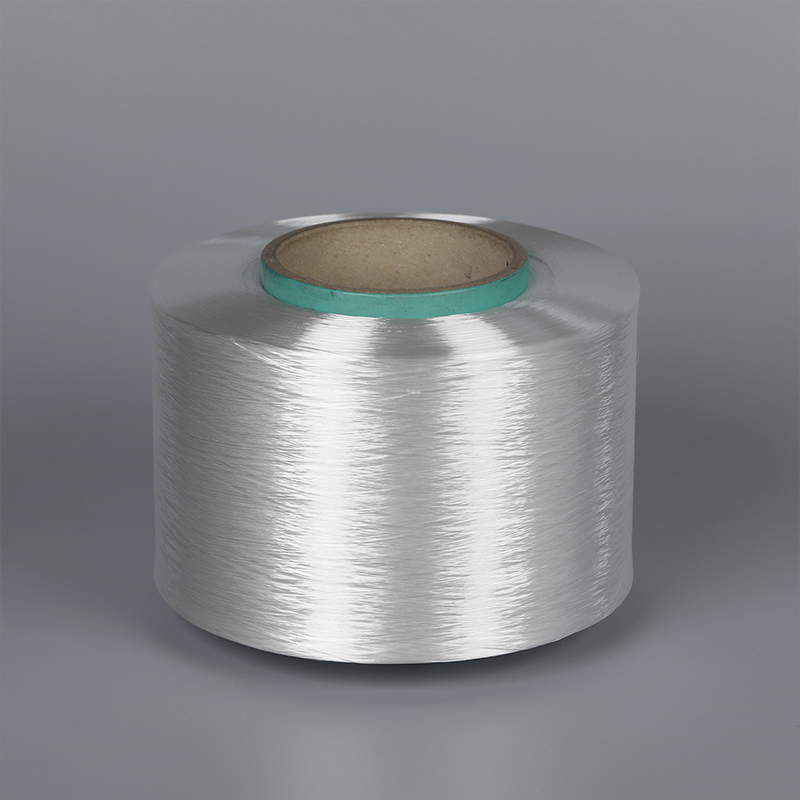
READ MORESheath Core Low Melting Yarn 110 Degree is a bi-component polyester yarn built with a low melting polyester sheath wrapped around a regular polyester core. Once heated, the outer sheath softens and bonds surrounding fibers together, while the core keeps its strength and shape. At GC FIBER, this yarn is engineered for buyers who need a dependable bonding fiber that performs consistently across large production batches, whether the end use is nonwoven fabric, wadding, filter material, or composite reinforcement.
The sheath core structure is the defining feature of this yarn. Under a microscope, the cross section shows a clear ring of low melting polymer surrounding a solid polyester core. This design allows the yarn to act as both a structural fiber and a thermal bonding agent within the same strand, which reduces the need for separate adhesive materials in many downstream processes. We manufacture this yarn at our facility in Nantong with attention to consistent cross section geometry, since uneven sheath thickness is one of the main causes of uneven bonding results on the production floor.
The yarn holds up under tension during high speed winding and unwinding, which lowers breakage rates on the production line. Consistent package quality makes rewinding smoother and reduces downtime during changeovers.
The low melting point activates bonding at moderate processing temperatures, which helps protect heat sensitive base fibers and can lower overall energy use during thermal bonding.
Acting as a built in adhesive fiber, it forms stable bonds between fiber layers without extra binder chemicals, which simplifies formulation and keeps the process cleaner.
| Item | Description |
|---|---|
| Structure | Sheath core cross section, low melting polyester sheath with regular polyester core |
| Melting Point | Approximately 110 degrees Celsius |
| Tenacity | High tenacity grade, suitable for high speed processing |
| Function | Thermal bonding agent within nonwoven and wadding structures |
| Packaging | Rewound on cones or as per buyer requirement |
| Industry | Use Case |
|---|---|
| Nonwoven Fabric | Thermal bonding of fiber webs without extra adhesive layers |
| Wadding and Filling | Shape retention in quilts, pillows, and insulation materials |
| Filtration Media | Structural bonding in filter layers requiring stable form |
| Automotive Interior | Molded composite parts needing heat activated bonding |
Nantong Global Chemical Fiber Co Ltd, known as GC FIBER, has operated as a special textile factory in China since 2006. Our work is centered on researching, developing, producing, and selling special and functional eco friendly textile products, including Biodegradable Yarn, Low Melting Yarn, ECDP Yarn, Anti Static Yarn, HDPE Yarn, Bio component Yarn, and Polyester Filament Yarn. For sourcing teams evaluating a low melting yarn supplier, this focus means our production line is set up specifically around bi-component fiber structures rather than general purpose polyester, which supports steadier sheath core consistency batch after batch. We are also open to working with clients on new material development where a project calls for a modified melting point, tenacity range, or fiber specification.
The sheath, made from low melting polyester, melts first during heat treatment and bonds to neighboring fibers, while the core stays intact and keeps the yarn strong and stable after the bonding process is complete.
Yes, a 110 degree melting point sits at the lower end of thermal bonding fiber options, which makes it a common choice when the surrounding material cannot tolerate high processing temperatures.
In many nonwoven and wadding applications, yes, since the sheath itself functions as the bonding agent, which can simplify the production process and reduce the number of materials involved.
We work with clients on tenacity, melting point range, and fiber dimensions where a project needs an adjusted specification, and we welcome inquiries about new material development.
Please fill out the form below and our team will contact you as soon as possible.
Addres: No.66 Qiaogang Road, Haian, Nantong City, Jiangsu Province, China
E-mail: service@gcfiber.com admin@gcfiber.com
Copyright ? GC FIBER All Rights Reserved. Custom Sheath-Core Polyester Low Melting Yarn 110 Degree Manufacturers
