English
 中文简体


Made of PBS (Polybutylene Succinate), fully biodegradable.Features:1.Home compostable2.Raw material: PBS Polybutylene Su...
READ MORE
Content
A weaver ordering 150D/48F air textured yarn (ATY) for automotive trim can receive two lots that match on denier and still run differently on the loom. One lot opens cleanly and covers the substrate; the other shows tight spots, collapsing loops, or a shade shift after heat exposure. The difference sits in loop structure, overfeed, air pressure, finish, and the end-use specification behind the purchase order.
ATY should be bought as a performance package, not a commodity denier. Define bulk, loop stability, tenacity, elongation, shrinkage, and color method before quoting.
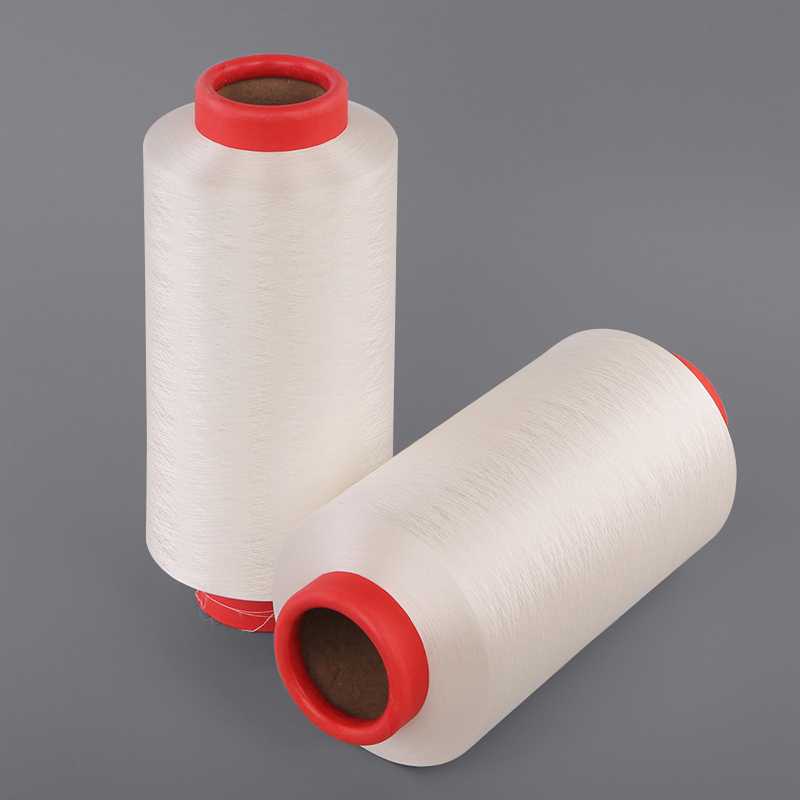
ATY is a continuous filament yarn textured with high-velocity air. A polyester or nylon multifilament is overfed into a texturing jet; filaments open, displace, and lock into loops and entanglement points. The result is not spun yarn and not false-twist crimp. It is a filament yarn with controlled bulk, softer hand, lower luster, and more cover per unit weight.
That matters in fabric development. FDY gives strength and a smooth surface; DTY gives crimp from heat and twist; ATY gives volume and looped texture from air and mechanical displacement. When the brief calls for matte cover or a dry touch without staple fiber, ATY is the direct route.
| Characteristic | ATY | DTY | FDY |
|---|---|---|---|
| Texturing method | Air jet, loop and entanglement | False twist, heat set | Flat, fully drawn |
| Surface and bulk | High cover, looped, matte | Crimped, softer, moderate bulk | Smooth, low bulk |
| Typical strength | Lower than parent flat yarn | Moderate | High |
| Best fit | Upholstery, automotive, filtration, ropes | Knits, woven apparel, stretch fabrics | Industrial, lining, downstream texturing |
Air texturing is fast, but several levers reach the buyer downstream. Overfeed controls how much filament length is pushed into the jet; more overfeed means more loops and bulk, plus greater risk of unstable loops. Air pressure and jet geometry affect loop size and tightness. Water injection can help open the bundle and stabilize structure. Winding tension and finish determine how the yarn runs on the next machine.
So two ATY samples labeled 150D/48F can behave like different products. Tight-loop ATY may resist flattening in weaving and give a cleaner surface. Open-loop ATY may feel softer and cover faster but can snag in fine-gauge knitting or shed filaments under friction. For automotive, filtration, or rope use, agree the loop profile with photos and a running trial, not only a denier number.
An order that says only "150D ATY" leaves too much open. Specify polymer, denier and filament count, color method, tenacity, elongation, boiling water shrinkage, loop character, finish level, and package format. Typical commercial polyester ATY windows run from about 75D to 600D, with tenacity around 2.5-4.0 cN/dtex and elongation around 15-35%, but these are starting points, not universal guarantees. Nylon and fine-denier microfiber ATY need different targets.
Color method deserves separate attention. Dope-dyed ATY can reduce downstream dyeing, water use, and shade risk, especially in automotive and outdoor textiles. If the program needs custom color and denier, ask for a master batch reference, shade tolerance, and lightfastness data before bulk. For piece-dyed programs, confirm that finish and loop structure will not create barre or uneven dye pickup.
ATY earns its place where cover, dry hand, and a non-plastic surface matter more than maximum tensile strength. Automotive interior fabrics use it for pillar trim, seat backs, and headliners where abrasion and UV exposure must be controlled. Upholstery and curtains use it to build volume without heavy fabric weight. Filtration media can benefit from the open, looped structure when dust holding and permeability are designed in. Coarser ATY suits ropes and cordage where texture and grip help handling.
It is not first choice for high-tenacity tire cord, thin industrial slings, or smooth linings where friction must be minimal. ATY generally has lower tenacity and abrasion resistance than the parent flat yarn, and loose loops can snag in fine-gauge knitting. The real question is not "Is ATY stronger than FDY?" but "Does the fabric need bulk and cover enough to justify the strength trade-off?"
Start with a running sample, not a color card. Ask for loop profile under high-resolution photo, tenacity and elongation on the ATY, shrinkage, oil content, and package density. Run the sample through the actual downstream step: weaving, knitting, braiding, or nonwoven bonding. A yarn that looks bulky on the package can flatten under tension or generate fly at speed.
For repeat orders, lot traceability matters as much as the first sample. Confirm parent yarn source, texturing line, and color batch. Check that the supplier inspects each step and keeps test records for tenacity, elongation, shrinkage, and appearance. A mill with in-house texturing and flexibility on denier, color, and package size can shorten development, but the buyer still needs a written specification and a signed sample. GC FIBER, operating from Nantong since 2006, positions its specialty fiber range around this kind of customized development, including polyester filament and ATY routes for industrial and textile buyers.
Lead time and shipping terms also belong in the decision. For export, confirm sea-freight packaging, moisture protection, and pallet stability. A low unit price is not a saving if packages arrive flattened or finish is inconsistent.
If your ATY program also needs a parent yarn, a bonding yarn, or a functional upgrade, these ranges are a practical place to start the conversation.
No. DTY is false-twist textured and heat set, which gives crimp and stretch. ATY is air textured, which creates loops and entanglement for bulk and cover. They can look similar on a package but behave differently in fabric.
Yes. Dope-dyed or spun-dyed ATY is used where shade consistency and reduced dyeing are priorities. Specify the color reference, lightfastness, and tolerance before bulk.
Polyester ATY is commonly quoted from around 75D to 600D, with coarser industrial versions available. Fine-denier microfiber ATY is also possible, but loop stability and hand requirements need tighter control.
It does not matter less in every application. In upholstery or automotive trim, bulk and abrasion behavior may drive the design, but tenacity still sets the minimum. Buyers should set both a strength floor and a bulk target.
ATY is a specification-driven yarn. The same denier can deliver very different cover, hand, and running performance depending on overfeed, air pressure, loop stability, finish, and color method. Define the end use first, then set the parent yarn, loop profile, tenacity, elongation, shrinkage, and package requirements around it. A supplier who can adjust those variables and provide test records is more valuable than a quotation that lists only denier and price.
Made of PBS (Polybutylene Succinate), fully biodegradable.Features:1.Home compostable2.Raw material: PBS Polybutylene Su...
READ MOREPlease fill out the form below and our team will contact you as soon as possible.
Addres: No.66 Qiaogang Road, Haian, Nantong City, Jiangsu Province, China
E-mail: service@gcfiber.com admin@gcfiber.com
Copyright ? GC FIBER All Rights Reserved. Eco-Friendly Textile Products Manufacturer Biodegradable Yarn Company