English
 中文简体
Made of PBS (Polybutylene Succinate), fully biodegradable.Features:1.Home compostable2.Raw material: PBS Polybutylene Su...
READ MORE
Content
A workwear buyer washes an ESD shirt 25 times, retests it, and finds surface resistance has climbed from roughly 10^8 to 10^12 ohm/sq. The garment still looks fine. Electrically, it is now an insulator. This is the most common failure in static-control textile programmes, and it is rarely a manufacturing defect — it is a mismatch between how the yarn controls static and how the garment is cleaned.
The short answer: wash durability is decided by how the conductive path is built into the fibre, not by the word "antistatic" on the datasheet. A topical finish typically survives 5 to 20 home launderings. A carbon-loaded conductive phase extruded inside the filament commonly holds its resistance through 30 to 50 or more cycles, provided fabric structure and care regime do not break the network. Detergent, temperature, drying and softener only shift that baseline up or down.
"Antistatic" is a performance claim, not a material. Asking for "antistatic polyester" without naming the mechanism usually gets you the cheapest option, which is also the least wash-durable one.
A surfactant or hydrophilic agent is padded onto the fabric and cured. It works by holding a thin film of moisture that bleeds charge away. It is inexpensive and works on any substrate, but it washes off: typically 5 to 20 home launderings, fewer in industrial laundering with alkaline detergents and high mechanical action.
Carbon black or a conductive polymer is compounded into the polymer and spun into the fibre, often as a sheath-core bicomponent where the conductive phase sits inside a protective sheath. Resistance typically lands between 10^7 and 10^10 ohm/sq depending on conductive filament ratio. Because the conductive path is part of the fibre itself, washing does not remove it; what limits service life is fibre fracture and surface abrasion, not leaching.
Silver-coated nylon and copper-sulphide coatings deliver very low resistance at low add-on, and they are the most fragile route in washing. Published e-textile studies report silver-based printed tracks cracking after as few as six wash cycles, with resistance climbing sharply afterwards — a clear warning for anyone specifying coated yarns for reusable workwear.
Stainless steel or carbon filament blended at 1 to 3 percent gives durable, humidity-independent performance, at the cost of hand feel, dyeing complexity and metal abrasion during knitting.
| Route | Typical surface resistance when new | Realistic wash life | Main failure mode |
|---|---|---|---|
| Topical antistatic finish | 10^9 to 10^11 ohm/sq | 5 to 20 home launderings | Finish leaching, surfactant removal |
| Carbon-loaded conductive filament | 10^7 to 10^10 ohm/sq | 30 to 50+ cycles with correct care | Fibre fracture, abrasion |
| Silver or copper-sulphide coating | 10^2 to 10^5 ohm/sq | Often under 20 cycles | Coating cracks and abrades |
| Blended steel or carbon filament | 10^4 to 10^8 ohm/sq | Long, limited by metal abrasion | Filament breakage, hand feel loss |
Most complaints about antistatic textiles losing performance trace back to one of five mechanisms, and only the first is genuinely "worn out".
"Wash resistant" without a protocol is marketing. Agree on the wash standard, the electrical test and the conditioning humidity before sampling, then apply them to the same fabric lot across the whole cycle count.
Write the acceptance criterion on a log scale, for example "surface resistance must not increase by more than one order of magnitude after 25 industrial cycles". Absolute ohm targets invite arguments about test equipment. Track mechanical retention too: repeated washing changes fibre strength as well as electrical performance, and a yarn that stays conductive while losing 30 percent tenacity is not a solution.
Send these seven points with every enquiry. Suppliers who cannot answer them will not be able to hold a specification later.
Even a well-built conductive filament yarn can be ruined by the wrong laundry programme. The practical rules are simple and cheap to apply.
For reusable workwear, cleanroom and filter applications, the practical choice is a carbon-loaded conductive filament in a sheath-core structure, with wash data supplied against a named standard. Grey and black carbon-loaded PET are the standard colourways, and because the colour comes from the conductive phase itself, batch-to-batch shade consistency is easier to hold than with piece dyeing.
A specialty fibre producer with in-house compounding, spinning and testing can usually adjust conductive filament ratio, denier and cross-section to hit a resistance target without changing the base polymer. GC FIBER, operating from Nantong, Jiangsu since 2006, runs multiple production lines with in-process inspection and short shipping distances to Ningbo and Shanghai, and supplies antistatic yarn as part of a wider functional and biodegradable fibre range. Buyers with a defined resistance window can request matched samples and a joint wash trial rather than accepting a catalogue figure.
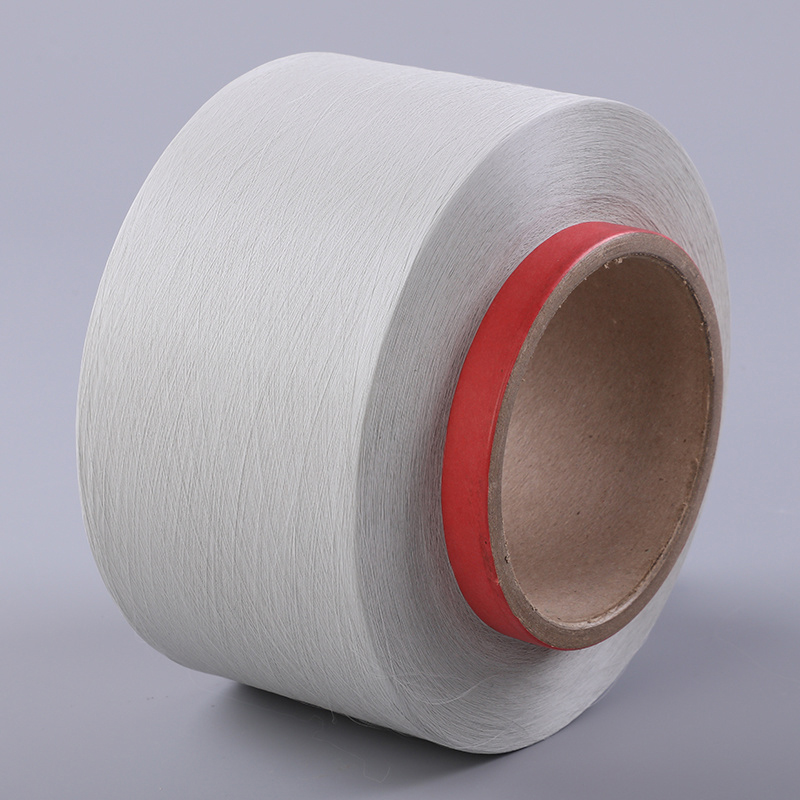 Grey Anti Static PET Filament YarnConductive grey PET filament for anti-static workwear and industrial textiles, offered in FDY/DTY counts with 10^9 Ω/cm resistivity and matched sample trials.View Product →
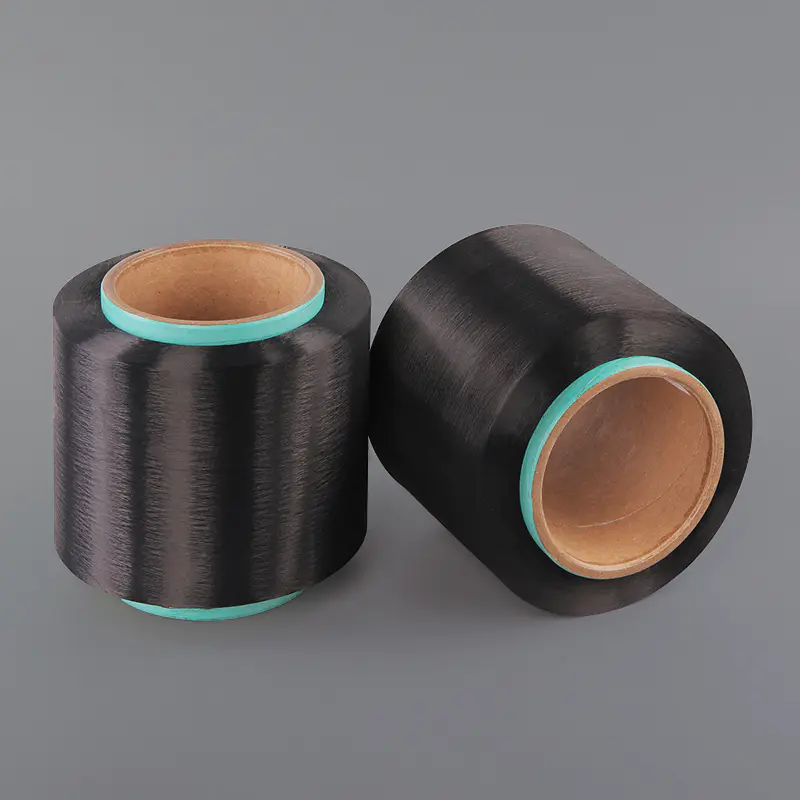 Custom Black Anti Static Polyester YarnBlack custom anti-static polyester yarn for cleanroom workwear, protective fabrics and automotive textiles; 20D–60D counts, 10^6 Ω/cm resistance and custom specifications.View Product →
It should last as long as the garment's service life, which is why the cycle count belongs in your purchase specification. Many programmes write 25 to 50 industrial cycles and require the resistance to stay within one order of magnitude of the initial value. Pick the number from your laundry schedule, not from a catalogue.
For a topical finish, yes — once the agent is gone, performance does not come back. For an incorporated conductive phase, resistance typically drifts within one order of magnitude over a long cycle count and then stabilises; a sudden jump usually signals filament or coating damage rather than normal wear.
Yes, but not with exposed carbon black. Use a sheath-core structure with a white sheath hiding a carbon-loaded core, or a non-carbon conductive polymer. Both cost more per kilogram than a standard grey conductive yarn, and both should be specified with the same wash test.
Both matter, and they interact. A finish that relies on adsorbed moisture can fail in a dry electronics plant while still new, and a conductive filament yarn that is humidity-independent will keep working through 40 washes. Test at low humidity if your end use runs dry.
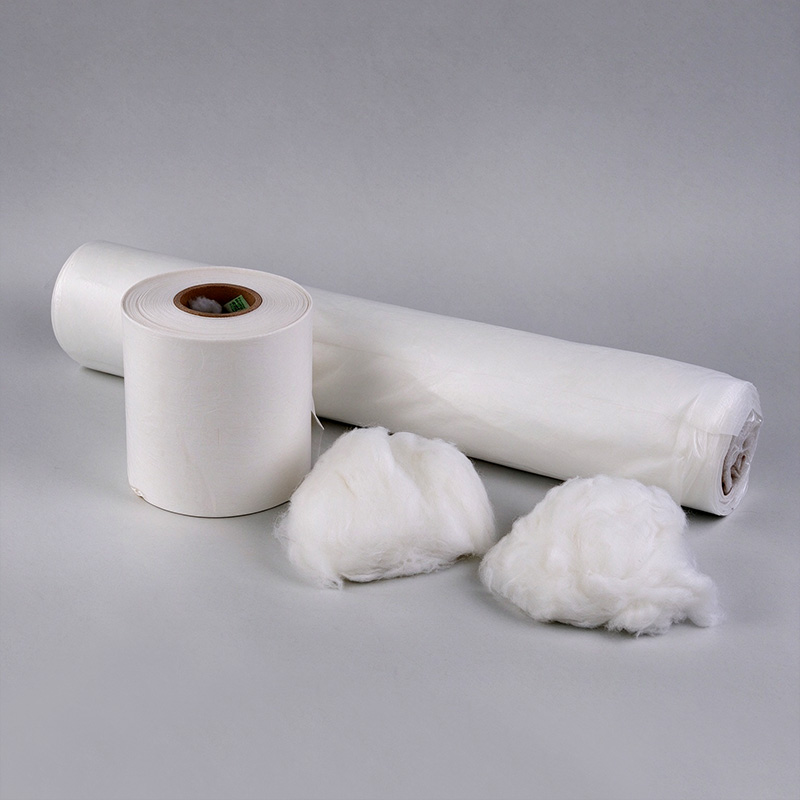
Made of PBS (Polybutylene Succinate), fully biodegradable.Features:1.Home compostable2.Raw material: PBS Polybutylene Su...
READ MOREPlease fill out the form below and our team will contact you as soon as possible.
Addres: No.66 Qiaogang Road, Haian, Nantong City, Jiangsu Province, China
E-mail: service@gcfiber.com admin@gcfiber.com
Copyright ? GC FIBER All Rights Reserved. Eco-Friendly Textile Products Manufacturer Biodegradable Yarn Company