 English
 中文简体
中文简体It is made with Bio-base PLA, fully biodegradable Feature: 1. Industrial compost product 2. Made with PLA 3. Eco-frie...
READ MORE
Content
A fabric mill developing an eco-friendly sportswear line usually starts with one practical question: can recycled polyester filament yarn match the consistency of virgin PET yarn on a high-speed loom? The short answer is yes, provided you verify melt viscosity, tensile strength and shrinkage from batch to batch. In our experience at GC FIBER, a specialty fiber factory operating since 2006, most quality complaints about recycled filament do not come from the material itself; they come from loosely controlled feed stock and unclear specifications.
Market attention is real. One market analysis cited in 2026 puts the recycled polyester filament yarn market at roughly USD 2.6 billion, with projected growth to USD 4.4 billion by 2035 at a compound annual growth rate of about 6 percent. That growth is driven by brand sustainability commitments, recycled content requirements in several regions, and the fact that modern recycled PET filament no longer means an obvious quality sacrifice. This guide explains what recycled polyester filament yarn is, how it is produced, how it performs, and what procurement teams should check before placing an order. You can start with our company overview if you want the background of the mill behind this article.
Recycled polyester filament yarn, often called rPET filament yarn, is a continuous synthetic filament made by melt-spinning recycled polyethylene terephthalate. The main raw materials are post-consumer PET bottles and pre-consumer polyester industrial waste.
Bottle flakes are the most common input because their polymer quality is more predictable. Used PET bottles are sorted, de-labeled, crushed, washed and dried into clean flakes before being melted into chips. Textile waste, such as cutting room scraps or post-industrial fiber waste, can also be recycled, but it usually requires more sorting and can contain dyes, finishes or fiber blends that complicate spinning. If a supplier cannot clearly state what their feedstock is, the yarn will be hard to control.
Like virgin polyester, recycled filament is available in three processing forms: POY, FDY and DTY. POY is a partially oriented yarn used mainly for draw-texturing; FDY is a fully drawn flat yarn suitable for weaving; DTY is a textured yarn with bulk and stretch for knitting and stretch-woven fabrics. Understanding the difference between POY, FDY and DTY helps you match the right product to your downstream process. The same recycled polymer can produce all three forms, but the drawing and heat-setting parameters need to be adjusted because recycled chips have a slightly lower molecular weight and a different viscosity profile than virgin chips.
Most recycled polyester filament yarn on the market is produced by physical recycling, although chemical recycling is becoming more common for high-end applications where contaminant removal matters.
The most important difference from virgin spinning is feedstock variability. A single batch of bottle flakes can contain slight variations in intrinsic viscosity, color and additive content. A good producer compensates by blending flakes, adjusting spinneret temperatures and testing every production lot. If the factory skips those steps, you will notice it in broken filaments, uneven dye uptake and lower tensile strength.
For most weaving, knitting and elastic applications, recycled polyester filament yarn performs close to virgin polyester. The table below illustrates the typical differences you can expect.
| Property | Virgin PET Filament | Recycled PET Filament |
|---|---|---|
| Color consistency | Very uniform | Can vary with flake quality |
| Tensile strength | Typically 3.8 to 5.0 cN/dtex | Typically 3.5 to 4.8 cN/dtex |
| Elongation at break | 20 to 35 percent | 22 to 38 percent |
| Thermal shrinkage | Low and stable | Slightly higher without heat-setting |
| Dye affinity | Good with disperse dyes | Good, but color depth can vary |
| Price stability | Tied to PX/MEG and oil | Tied to bottle flake supply |
| Eco credentials | Lower recycling content | Recycled content claim supported by certificates |
In practice, the numbers above are acceptable for most apparel, home textile and industrial uses. The key is not to compare a cheap recycled yarn against a premium virgin yarn; compare the same dtex, filament count and processing route. For fine-denier markets such as linings, seamless garments and soft-touch outerwear, many mills start with a polyester micro filament yarn because it delivers a silk-like hand while preserving the strength advantages of a drawn filament.
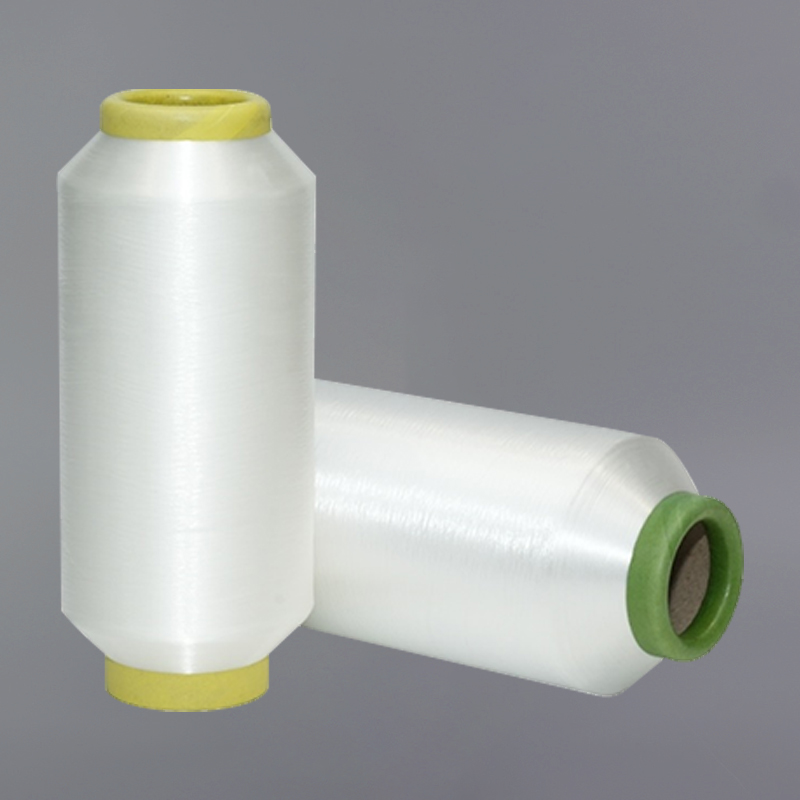 Custom Polyester Micro Filament Yarn DTY 18D/48F Manufacturers, Company - GC As Polyester Micro Filament Yarn DTY 18D/48F manufacturer and Polyester Micro Filament Yarn company in China, GC FIBER specializes in c...View Product →
Common end uses include activewear, jackets, bags, webbing, automotive interior fabrics, home textiles and drapery. If you want to understand where the material fits in more detail, the common end uses of polyester filament yarn are covered in a separate industry note.
Buying recycled filament is not the same as buying a standard commodity yarn. The purchasing decision depends on documented traceability, clear technical parameters and the supplier’s ability to support trials.
For export-oriented manufacturers, recycled content claims must be verifiable. The Global Recycle Standard is now a basic requirement in many purchase orders, and some buyers also ask for OEKO-TEX STeP or similar supply-chain evidence. Certification is not a marketing add-on; it protects you from claims disputes during an audit. Ask the supplier for the exact percentage of recycled content, the type of feedstock, and the facility scope of the certificate.
Do not order by “recycled polyester” alone. Write down the dtex and filament count, such as 75D/72F or 150D/48F, the desired strength and elongation range, the hot-air shrinkage limit, and the lubrication or oil pick-up percentage. If the yarn will be dyed, request a lab dip against a standard polyester swatch and check for shade repeatability. A responsible supplier will provide a pilot batch before full production.
Recycled filament performs best when the producer understands both melt-spinning and downstream processing. A specialty fiber factory with multiple production lines can adjust cross-sections, tenacity or elongation for a specific application. For example, if you need an especially fine and uniform yarn for a technical woven fabric, ask for a polyester finest yarn sample and run it on your own machine before placing a large order.
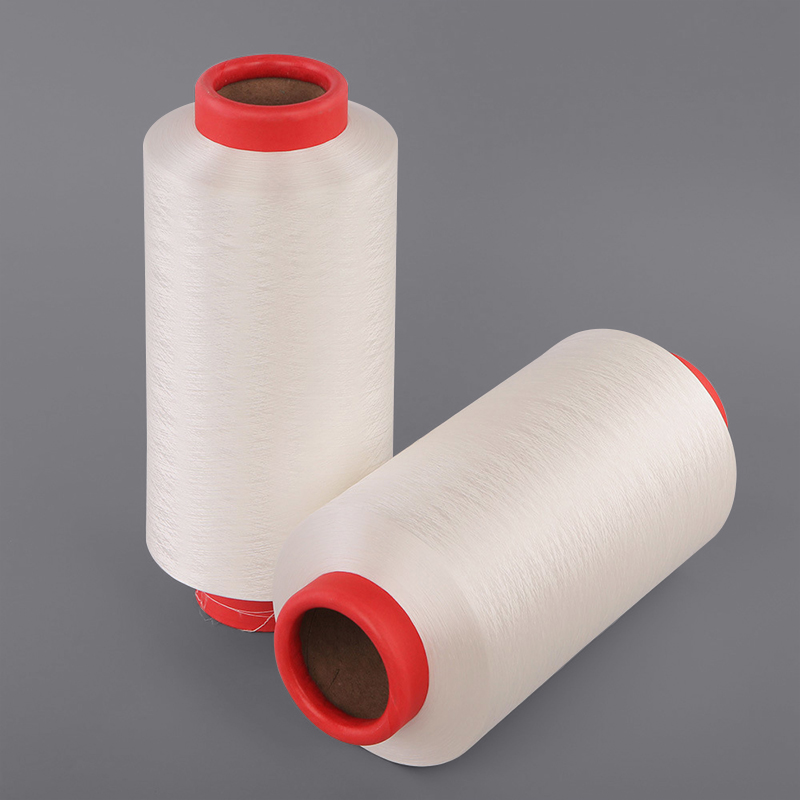 Custom Polyester Finest Yarn DTY 7D/8F 10D/12F Manufacturers, Company - GC FIAs Polyester Finest Yarn DTY 7D/8F 10D/12F manufacturer and Polyester Finest Yarn company in China, GC FIBER specializes in custom Poly...View Product →
If your product brief focuses on end-of-life disposal rather than recycled content, also evaluate a PLA biodegradable filament yarn as a drop-in alternative. Although PLA is a different polymer, it offers a clearer degradation story for single-use or short-cycle textile products.
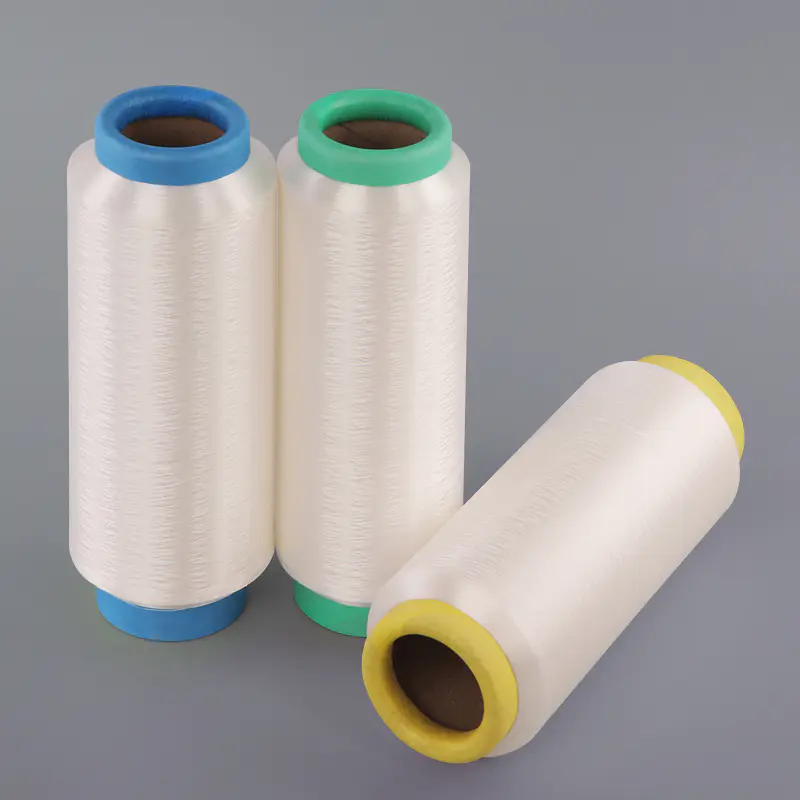 Custom PLA Biodegradable Filament Yarn Manufacturers, Company - GC FIBERAs PLA Biodegradable Filament Yarnmanufacturer and PLA Biodegradable Filament Yarn company in China, GC FIBER specializes in custom PLA B...View Product →
Recycled polyester filament yarn is a viable commercial material, not a compromised substitute. It handles high-speed processing, reproduces most virgin-polyester aesthetics and supports circularity targets. The risks are manageable when you control three things: verified feedstock, a written technical spec and a supplier who tests each lot.
Start small. Request samples, compare the yarn against your current material, inspect winding quality and dye consistency, then scale up. If you want to review available options, browse our polyester filament yarn product range or talk to us with your specific denier and filament requirements.
It is made with Bio-base PLA, fully biodegradable Feature: 1. Industrial compost product 2. Made with PLA 3. Eco-frie...
READ MOREPlease fill out the form below and our team will contact you as soon as possible.
Addres: No.66 Qiaogang Road, Haian, Nantong City, Jiangsu Province, China
E-mail: service@gcfiber.com admin@gcfiber.com
Copyright ? GC FIBER All Rights Reserved. Eco-Friendly Textile Products Manufacturer Biodegradable Yarn Company


