English
 中文简体
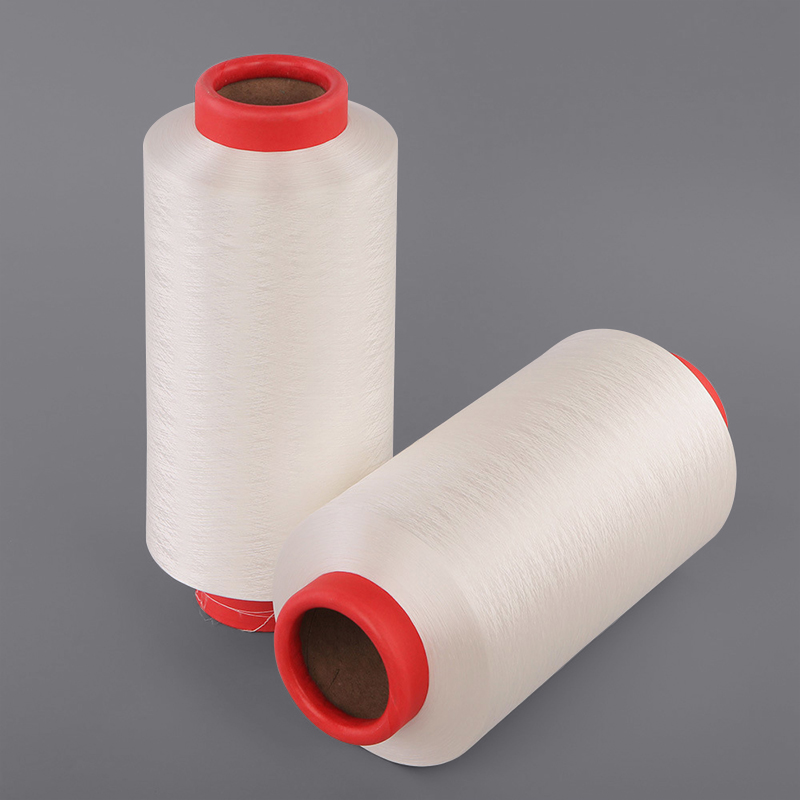
中文简体It is made with Bio-base PLA, fully biodegradable Feature: 1. Industrial compost product 2. Made with PLA 3. Eco-frie...
READ MORE
Content
A rope weaver and a swimwear fabric knitter both purchase nylon multifilament yarn, yet their specifications rarely overlap. The weaver wants high tenacity, controlled elongation, and UV stabilizers. The knitter wants fine denier, a high filament count for softness, and dye uptake that behaves the same batch after batch. "Nylon" alone says almost nothing about the product. The real differences sit in denier, filament count, draw state, and finish — and those numbers determine whether the yarn performs or fails on your line.
This guide explains what nylon multifilament yarn is, which properties matter most in practice, how it compares with polyester, and the specification points to check before placing an order.
Nylon multifilament yarn is a continuous yarn made from multiple fine individual filaments extruded from polyamide polymer — typically polyamide 6 (PA6) or polyamide 66 (PA66) — and then combined into a single bundle. Unlike cotton or wool yarns, which twist short staple fibers together, a multifilament yarn is smooth and uniform, with no protruding fiber ends. That structure gives it high physical consistency, low fuzz, and precise control over both strength and hand feel.
The number of filaments in the bundle is the first decision point. A 70-denier yarn with 24 filaments (written as 70D/24F) feels noticeably finer and more supple than a 70D/12F yarn, which feels stiffer and more compact. Higher filament counts cost more to extrude but are standard in hosiery, linings, and activewear where drape matters. Lower filament counts are common in industrial webbing and ropes where stiffness and economy are priorities.
Nylon multifilament also comes in several drawing states. Fully drawn yarn (FDY) is stable and ready for weaving or knitting. Drawn textured yarn (DTY) adds crimp and bulk through heat treatment, giving more stretch and a fuller hand. Partially oriented yarn (POY) is a semi-finished product that is usually texturized or drawn on downstream equipment. The difference between POY, FDY, and DTY yarns changes how the yarn is processed and what the final fabric feels like.
The continued dominance of nylon multifilament in demanding applications comes down to five measurable properties:
Most nylon applications have a polyester alternative, and material switches happen regularly for cost or performance reasons. The table below gives typical ranges for commodity grades.
| Property | Nylon Multifilament | Polyester Multifilament |
|---|---|---|
| Tenacity (cN/dtex) | 4.5 – 9.0 | 3.5 – 7.5 |
| Elongation at break | 20 – 40% | 15 – 35% |
| Abrasion resistance | Excellent | Good |
| UV resistance | Moderate | Good |
| Acid resistance | Poor | Good |
| Moisture regain | ~4% | ~0.4% |
| Melt point | 220 – 255 °C | ~255 °C |
| Relative price | Moderate to high | Lower |
If your product needs elasticity, impact absorption, or repeated rubbing, nylon is usually the stronger choice. If it spends years in sunlight, encounters acid chemistry, or competes strictly on cost, polyester is often safer.
Outside the nylon-polyester comparison, how HDPE yarn is different from nylon is a common question in rope and net applications, mainly because HDPE floats and does not absorb water. Its lower melting point and higher creep rate, however, require careful application-specific evaluation.
When a woven or knitted structure needs a cool-touch surface and high toughness without nylon's cost premium, PE flat FDY yarn offers a distinct alternative in our functional yarn range.
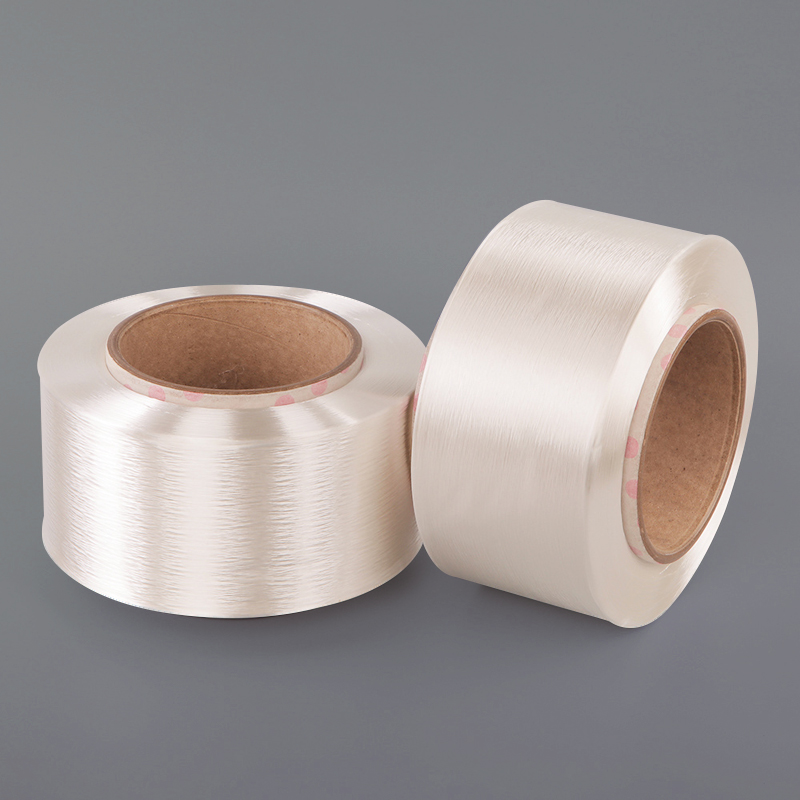 Custom PE Flat FDY Yarn FDY 50D 75D 100D 200D 300D 400D Other: Shanghai seaporAs PE Flat FDY Yarn FDY 50D 75D 100D 200D 300D 400D Other: Shanghai seaport Special produce by ordermanufacturer and PE Flat FDY Yarn c...View Product →
A specification like 210D/36F defines both total size and texture. Denier (D) controls linear density and, roughly, strength. Filament count (F) controls flexibility and feel. A 70D/24F yarn is a different product from a 70D/12F yarn even though both are called "70 denier nylon." Ask your supplier for both numbers; the price and the fabric hand follow directly from them.
PA6 is easier to process, more economical, and in many formulations dyes more uniformly. PA66 melts higher, carries higher tenacity, and holds up better under heat and dynamic load. Map your fabric's heat exposure and load profile before choosing.
UV stabilizers, anti-static additives, flame-retardant modifiers, and spin finishes can be incorporated during extrusion. For technical end-uses, specify the additive package in writing rather than assuming the base polymer alone will pass certification.
For bonding and stiffening applications, a 100% nylon low-melting yarn with a 110 °C activation point can replace adhesive films and powders in textile lamination, shoe upper reinforcement, and interlinings. It bonds to nylon or polyester fabrics at low temperature without visible glue lines.
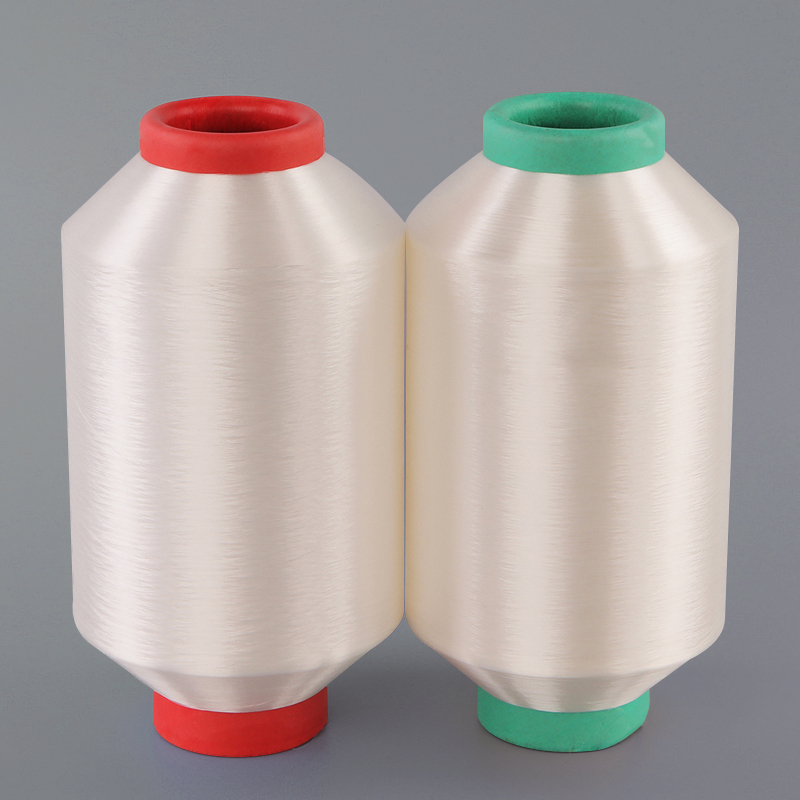 Custom Pure Nylon Low Melting Yarn 110 Degree 20D, 30D, 40D, 50D, 70D, 100D, 15As Pure Nylon Low Melting Yarn 110 Degree 20D, 30D, 40D, 50D, 70D, 100D, 150D, 200D, 300D. manufacturer and Pure Nylon Low Melting Yarn...View Product →
The practical value of nylon multifilament shows up in three groups of end-uses:
For a broader overview that includes nylon staple and monofilament forms, see our guide to what 100% nylon yarn is used for.
If your application turns toward lower-cost alternatives, polyester filament yarns perform well in many of these cases — especially where UV and chemical exposure are the dominant risks. For exceptionally soft fabrics, polyester micro filament yarn is a practical option with a silk-like hand at a moderate price.
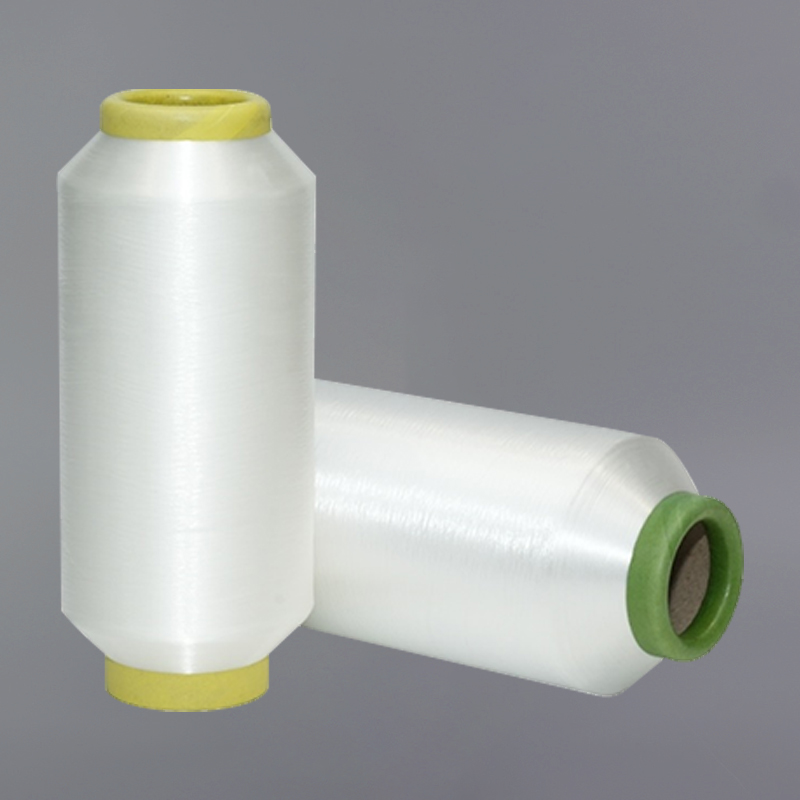 Custom Polyester Micro Filament Yarn DTY 18D/48F Manufacturers, Company - GC As Polyester Micro Filament Yarn DTY 18D/48F manufacturer and Polyester Micro Filament Yarn company in China, GC FIBER specializes in c...View Product →
GC FIBER, the company behind this guide, has manufactured specialty and functional chemical fiber yarns since 2006. Its product range includes biodegradable PLA yarns, low-melting yarns, anti-static yarns, ECDP yarns, HDPE yarns, and polyester filament yarns. Based in Jiangsu with convenient access to Shanghai and Ningbo ports, the company also develops customized solutions for nylon-focused requirements — including flame-retardant nylon fibers and nylon low-melting grades for bonding applications.
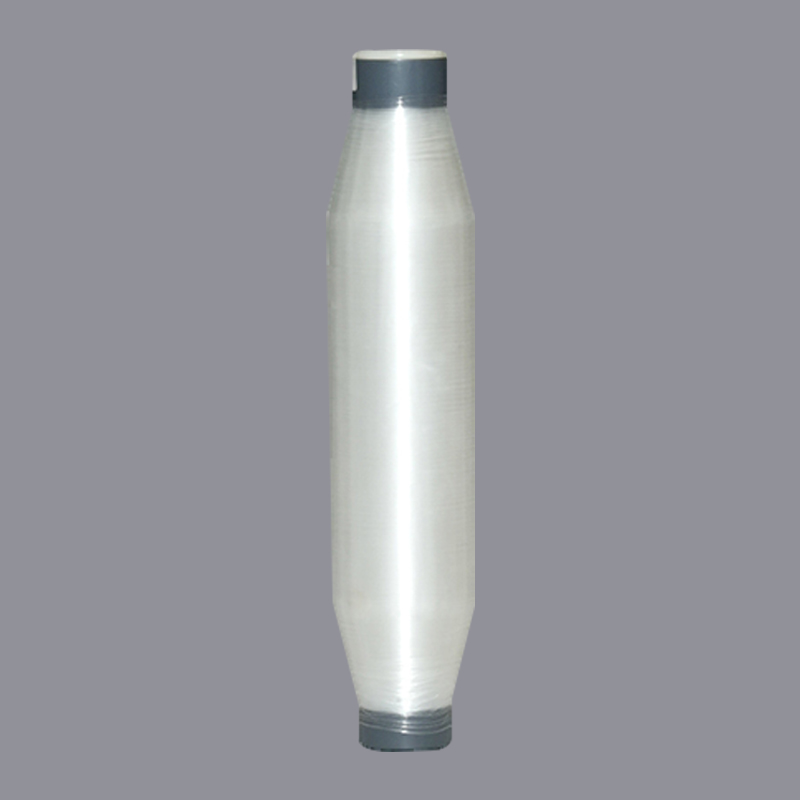
It is made with Bio-base PLA, fully biodegradable Feature: 1. Industrial compost product 2. Made with PLA 3. Eco-frie...
READ MOREPlease fill out the form below and our team will contact you as soon as possible.
Addres: No.66 Qiaogang Road, Haian, Nantong City, Jiangsu Province, China
E-mail: service@gcfiber.com admin@gcfiber.com
Copyright ? GC FIBER All Rights Reserved. Eco-Friendly Textile Products Manufacturer Biodegradable Yarn Company