 English
 中文简体
中文简体It is made with Bio-base PLA, fully biodegradable Feature: 1. Industrial compost product 2. Made with PLA 3. Eco-frie...
READ MORE
Content
Four-way stretch is one of the hardest requirements for a woven fabric to hit. A mill once brought us a prototype pair of trousers that recovered well in one direction but bagged out in the other. Their yarn engineer traced the problem to a low-modulus weft, and the material that solved it was PBT yarn.
PBT yarn is a melt-spun synthetic filament made from polybutylene terephthalate, a polyester that uses 1,4-butanediol instead of ethylene glycol. The longer, more flexible diol gives PBT a lower glass-transition temperature and a lower initial modulus than PET. In practical terms, it feels softer, stretches more easily, and returns to shape better than a standard polyester yarn.
Mills order PBT in several forms. The most common is POY (partially oriented yarn), which is then textured into DTY (drawn textured yarn) to add bulk and stretch. Understanding the difference between POY and DTY yarns is important because the choice affects crimp, recovery, and final fabric hand.
The real benefit of PBT yarn is not maximum elongation; it is elastic recovery. A fabric can stretch by 30% and still feel wrong if it does not return to its original size. PBT recovers quickly after low and moderate strain, which is why it is used in dual-stretch woven fabrics, knitted activewear, and elastic sewing thread.
Because PBT is a thermoplastic filament rather than an elastomer, it resists chlorine, UV light, and repeated washing better than bare spandex. In woven fabrics, a PBT weft can replace a covered spandex thread and reduce the uneven tension that elastane often creates. The result is a more even fabric surface and fewer faults in finishing.
For a woven fabric to achieve true four-way stretch, the design normally combines a stretchable warp with a stretchable weft. PBT yarn is a practical way to make that weft elastic without adding a separate rubber or spandex component, which simplifies warping, weaving, and finishing.
The distinction between PBT yarn and PBT core-spun yarn causes frequent confusion. PBT yarn is a continuous filament made entirely from PBT polymer. PBT core-spun yarn is a composite yarn in which a PBT filament core is wrapped with a staple fiber sheath such as cotton, polyester, or viscose. The core gives stretch; the sheath gives surface texture, absorbency, or color depth.
Both products have their place, but they serve different textile constructions.
| Property | PBT Yarn | PET Yarn | PBT Core-Spun Yarn |
|---|---|---|---|
| Elasticity and recovery | Good recovery after low and moderate strain | Poor unless mechanically modified | Good; core drives recovery, sheath controls surface |
| Dyeing behavior | Can be dyed at the boil without carrier | Requires high-temperature dyeing or carrier | Depends on core and sheath; often easier than PET |
| Crystalline melting point | About 223°C | About 260°C | Core about 223°C; sheath material determines overall |
| Thermal shrinkage | Higher; needs process control | Lower and more predictable | Higher from core; sheath can stabilize |
| Typical forms | POY, DTY, flat filament | POY, DTY, FDY | Ring-spun or compact core-spun yarn |
When you need stretch in a woven fabric with a natural-touch surface, core-spun yarn is often a better choice. When you need pure filament properties for knitting or direct weaving, PBT filament yarn is simpler and easier to process.
Before you place an order, ask for specific indicators instead of a generic “elastic” label. Four properties matter most.
Request recovery after 10% and 20% elongation. Good PBT yarn typically recovers above 90% at low extension, with low permanent set. This number is more important than the raw maximum elongation.
Because PBT has a lower glass-transition temperature than PET, it can be dyed at the boil without a carrier. That lowers dyeing cost and chemical load, but you should still verify fastness in the exact shade you plan to run.
PBT yarn can show high heat shrinkage in hot water if not pre-treated, so verify boil-water shrinkage before weaving. In high-density fabrics, uncontrolled shrinkage can cause waviness or poor dimensional stability. Ask whether the supplier offers thermally pre-treated yarn.
PBT shares most of polyester’s chemical resistance and adds better chlorine and UV stability. Confirming your end-use requirements—swimming pool, outdoor exposure, or frequent laundering—helps narrow the right denier and finish.
PBT yarn is used where polyester-like performance and durable stretch are required. In weaving, it appears as weft in four-way stretch women’s trousers, denim, and dual-stretch shirting. In knitting, it runs on both warp and weft machines for swimwear, sportswear, socks, and seamless garments. It is also used as elastic sewing thread because the seam can stretch with the fabric without breaking.
For more general polyester filament applications, it is worth comparing PBT with other yarn types. Our polyester filament yarn applications guide explains where standard polyester remains a better fit.
At GC Fiber, our specialty production focuses on polyester filament and functional yarns. If your project calls for a soft, silk-like hand rather than stretch, our polyester micro filament yarn is a common choice for high-density woven fabrics. For extremely fine counts used in lightweight linings and blends, our polyester finest yarn has been tested in similar applications.
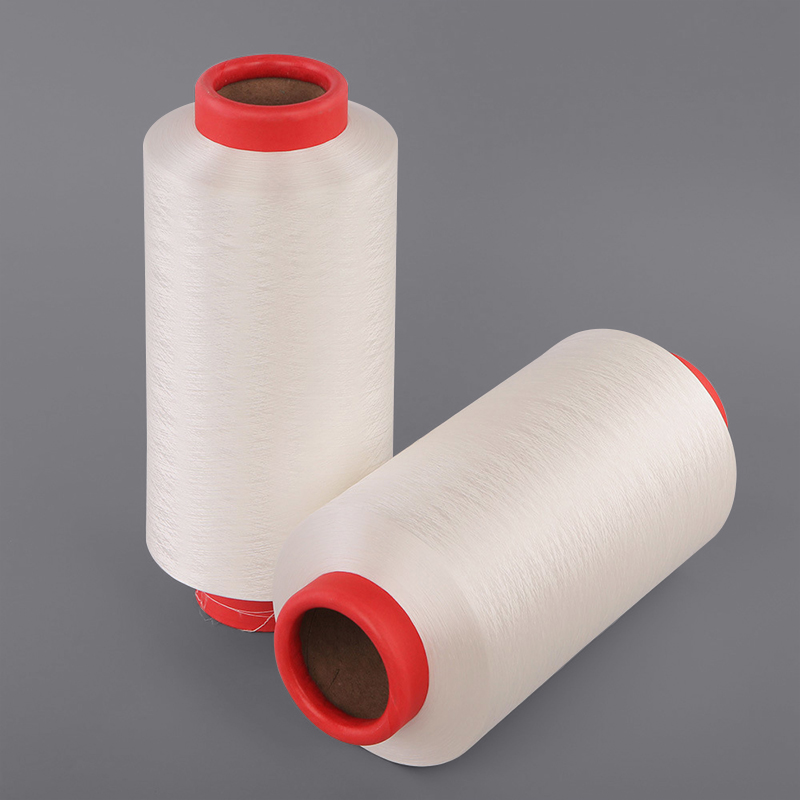 Custom Polyester Finest Yarn DTY 7D/8F 10D/12F Manufacturers, Company - GC FIAs Polyester Finest Yarn DTY 7D/8F 10D/12F manufacturer and Polyester Finest Yarn company in China, GC FIBER specializes in custom Poly...View Product →
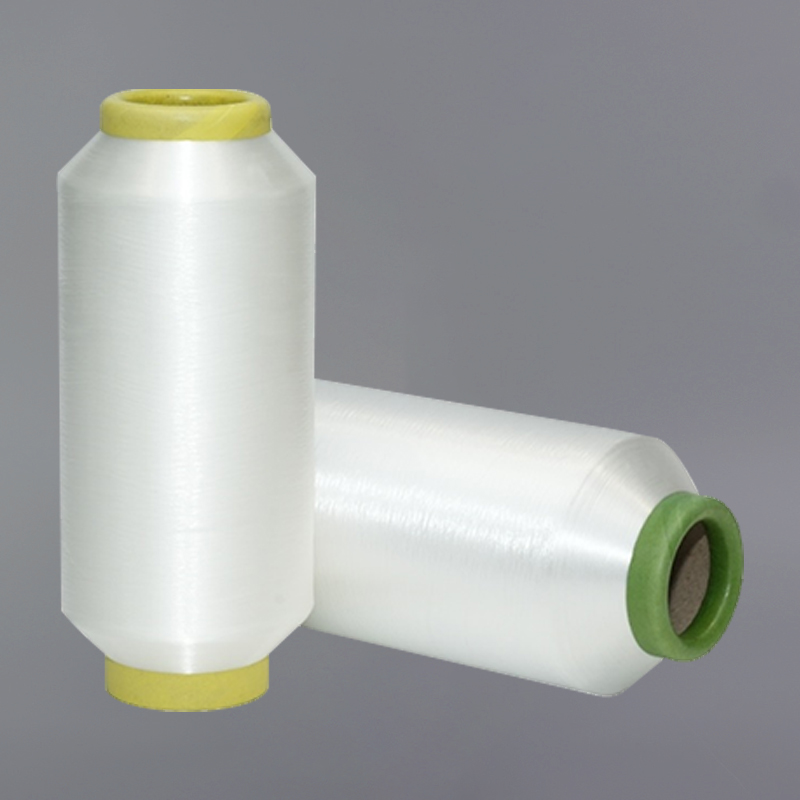 Custom Polyester Micro Filament Yarn DTY 18D/48F Manufacturers, Company - GC As Polyester Micro Filament Yarn DTY 18D/48F manufacturer and Polyester Micro Filament Yarn company in China, GC FIBER specializes in c...View Product →
Start with a clear specification, not a type name. Define the fineness in denier or dtex, the number of filaments, and the required recovery. Then request the full datasheet, including tenacity, elongation, boil-water shrinkage, and dye absorption.
Use a short trial before bulk production:
Because PBT is often supplied in textured form, the texturing parameters directly affect performance. If you are comparing PBT DTY with other textured yarns, our guide to choosing the right DTY yarn for knitting or weaving may help you evaluate samples more systematically.
Supplier communication matters as much as the datasheet. GC Fiber has produced specialty chemical fiber since 2006 and works with customers on tailored materials. Although PBT is not in our standard product list, we often guide customers through similar evaluation for polyester filament products, and we are always open to discussing a custom development project.
It is made with Bio-base PLA, fully biodegradable Feature: 1. Industrial compost product 2. Made with PLA 3. Eco-frie...
READ MOREPlease fill out the form below and our team will contact you as soon as possible.
Addres: No.66 Qiaogang Road, Haian, Nantong City, Jiangsu Province, China
E-mail: service@gcfiber.com admin@gcfiber.com
Copyright ? GC FIBER All Rights Reserved. Eco-Friendly Textile Products Manufacturer Biodegradable Yarn Company


