English
 中文简体
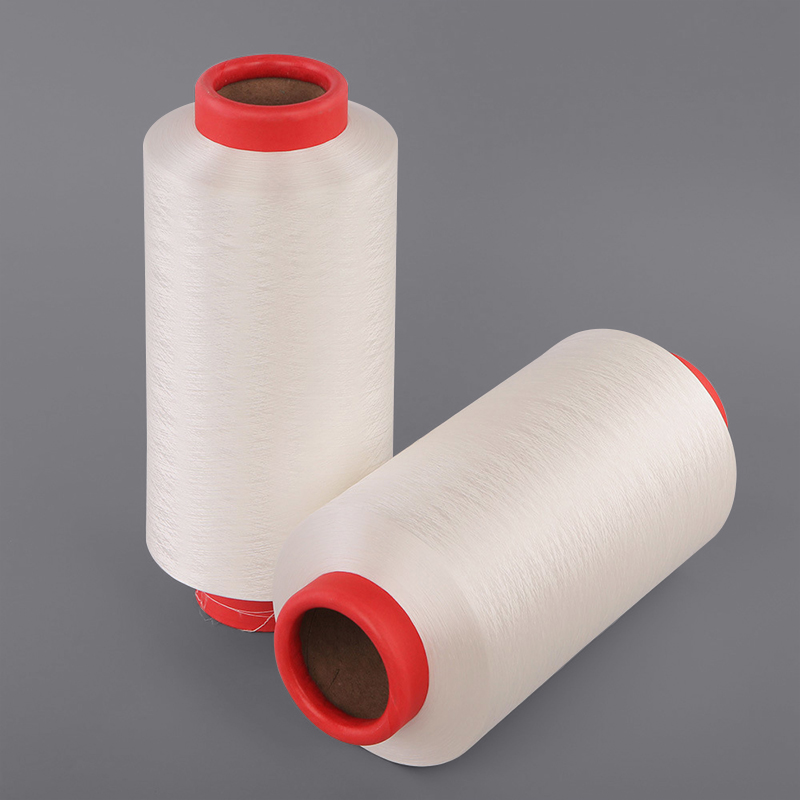
中文简体It is made with Bio-base PLA, fully biodegradable Feature: 1. Industrial compost product 2. Made with PLA 3. Eco-frie...
READ MORE
Content
Two 75D/72F filament packages reach the same knitting mill in the same week. One is standard polyester, one is sold as recycled polyester. Both sit inside the same denier tolerance, both come with a tensile sheet, both are quoted at a similar price. Six weeks later, one fabric clears the shade check and the other comes back from dyeing half a shade off, with broken picks scattered through the greige roll.
That gap is not a quality accident. Recycled polyester and virgin polyester are the same polymer, polyethylene terephthalate, and the real difference sits in the feedstock stream rather than in the chemistry. A bottle-derived chip and a naphtha-derived chip polymerise into the same repeat unit. What changes is everything that arrives alongside the feedstock: colorants, label adhesive, PVC caps, trace metal residues, and a wider spread of intrinsic viscosity from lot to lot.
So the useful question is not which one is better. It is which one your process can absorb, and what you are willing to pay in testing, machine adjustments and documentation to keep the finished fabric inside tolerance.
Polyester is PET, built from purified terephthalic acid and monoethylene glycol. Recycled polyester is the same molecule; only the feedstock differs, arriving as post-consumer bottles, post-industrial filament waste or recovered nets instead of petrochemical intermediates. Melting behaviour and density barely move: both sit around a 255 to 260 °C melting range and 1.38 to 1.40 g/cm³ density, and both take disperse dyes through the same generic chemistry.
That is why the two can be blended in the same spin beam, drawn on the same machine and knitted into the same fabric without anyone noticing on the loom. The comparison only becomes real when you look at batch consistency, colour and paperwork.
Bottles are sorted by colour and polymer type, ground, hot-washed, separated by density, dried, extruded and re-polycondensed into chip. It is the cheapest route per kilogram and the source of most textile-grade recycled polyester. The penalty is carried-over chemistry. PVC caps and label adhesives release hydrogen chloride during melting, which causes chain scission, and the finished chip typically lands at 0.55 to 0.64 dL/g intrinsic viscosity against 0.62 to 0.68 dL/g for fibre-grade virgin PET. Residual colorants and adhesives survive as a grey-yellow tint that no amount of blending fully hides.
Glycolysis, methanolysis or hydrolysis breaks the chain down to BHET, DMT or the raw monomers, which are then repolymerised. Dyes and contaminants are removed, so IV and colour return to virgin level. The trade-offs are cost, usually well above virgin chip, and available capacity, which remains concentrated in a limited number of plants.
| Parameter | Virgin PET | Mechanical rPET | Chemical rPET |
|---|---|---|---|
| Polymer identity | PET | PET | PET |
| Typical IV (dL/g) | 0.62 to 0.68 | 0.55 to 0.64 | 0.62 to 0.68 |
| Tenacity (cN/dtex) | 3.8 to 4.5 | 3.2 to 4.2 | 3.7 to 4.4 |
| Colour and shade repeatability | Neutral, bright | Grey-yellow tint, lot to lot drift | Close to virgin |
| Contamination risk | Low | PVC, PA, PLA, adhesive traces | Low |
| Relative cost | Baseline | Volatile, often at or above virgin | Above virgin |
| End-of-life behaviour | Not biodegradable | Not biodegradable | Not biodegradable |
Read against a live order, the table turns into practical pressure points. Lower IV and residual colorants shift dye uptake, so a shade that runs at 130 °C on virgin yarn may need a longer hold or a few degrees more heat on recycled yarn, and the recipe has to be re-verified per lot rather than once per season. Denier uniformity is the second pressure point: ask for a within-package CV of 1.5 percent or tighter, because recycled chip with a wide IV spread tends to produce a wide denier spread, and that shows up as barré in flat knits. Third is abrasion: a shorter average chain length means more fibre loss and faster pilling in knitwear and upholstery.
Where the end use depends on denier uniformity and very fine filaments, fine-gauge knits, soft-touch linings and high-count microfibre fabrics, the safer starting point is a controlled virgin microfilament yarn rather than recycled chip.
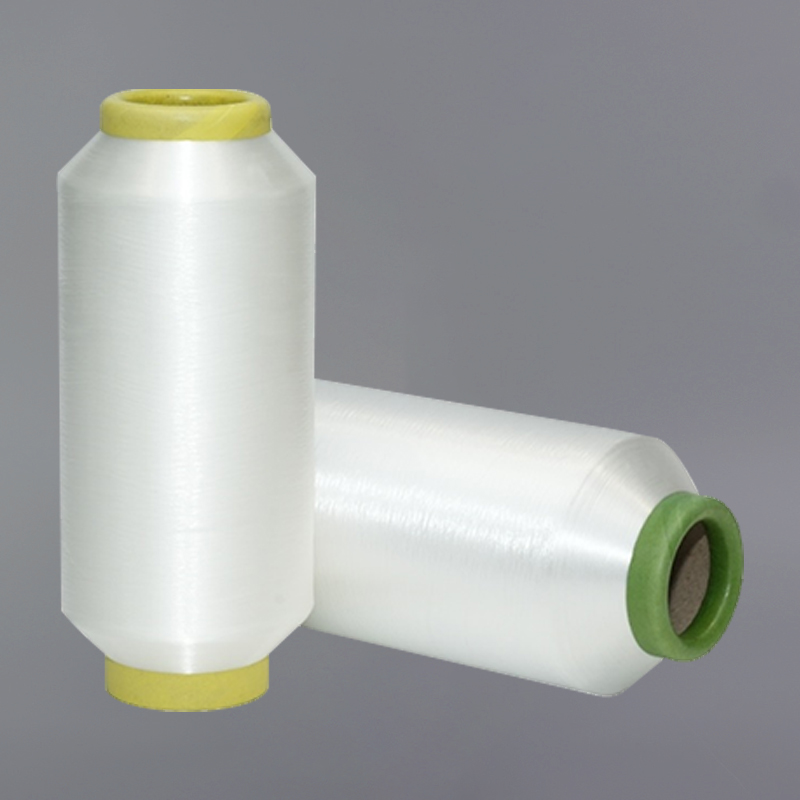 Polyester Micro Filament YarnIt is made with polyester, we can special produce micro filament, DPF can less 0.5View Product →
A recycled content claim is only as strong as the chain of custody behind it. Most certified programmes work with one of three models: physical segregation, mass balance, or book and claim. Under mass balance, the certificate may state a recycled percentage for a production volume while an individual package contains less recycled material than the label suggests. If your customer is publishing a claim on a hangtag, ask which model applies, per shipment, and keep the transaction certificate with the lot number.
Pricing deserves the same scrutiny. Recycled flake competes with bottle-grade demand from packaging converters, so recycled chip is not automatically cheaper than virgin; in tight quarters it trades at a premium, and that premium moves faster than virgin resin. Build the recycled share into the cost sheet with a quarterly review rather than a fixed annual assumption.
If you are drafting this kind of specification for the first time, a walkthrough of recycled polyester filament yarn process, benefits and buying criteria is a practical starting point before you commit to a bulk order.
Recycled polyester reduces the demand for virgin feedstock. It does not make the fibre biodegradable, it does not stop microfiber shedding in washing, and mechanical recycling is open-loop: each cycle shortens the polymer chain, which is why bottle-to-fibre is far more common than fibre-to-fibre. A brand that has set an end-of-life or compostability target rather than a recycled content target is solving the wrong problem with rPET.
For those briefs, the more direct route is a genuinely degradable polymer, such as PLA filament yarn produced from renewable feedstock, which addresses disposal rather than feedstock origin.
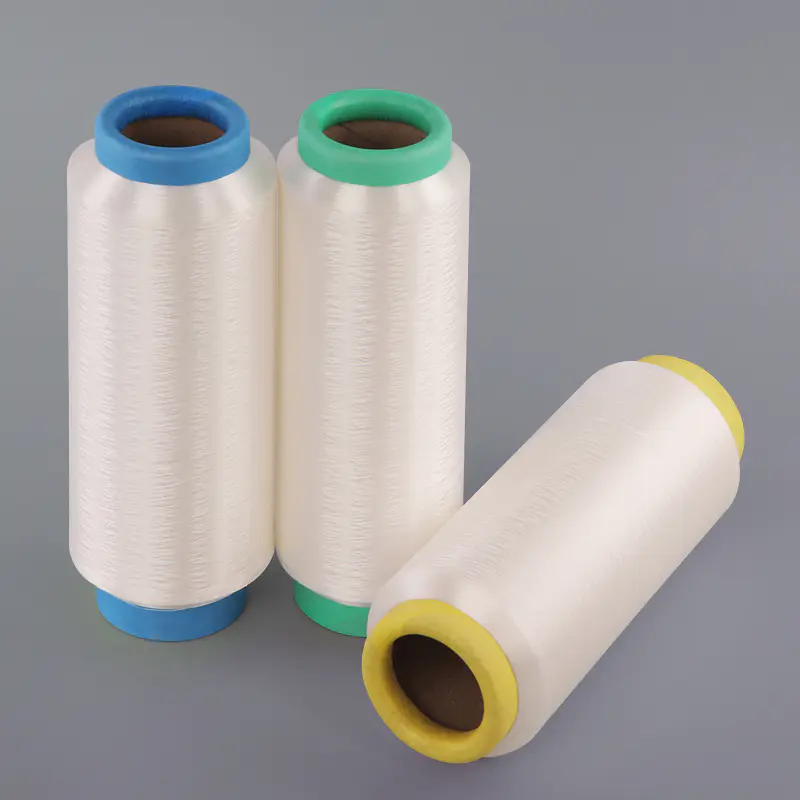 PLA Biodegradable Filament YarnCustomization & OEM ServiceView Product →
On that last point, functional grades are usually built on virgin PET or a copolymer base with a defined additive route, and the performance has to be verified after repeated washing rather than in a single lab test.
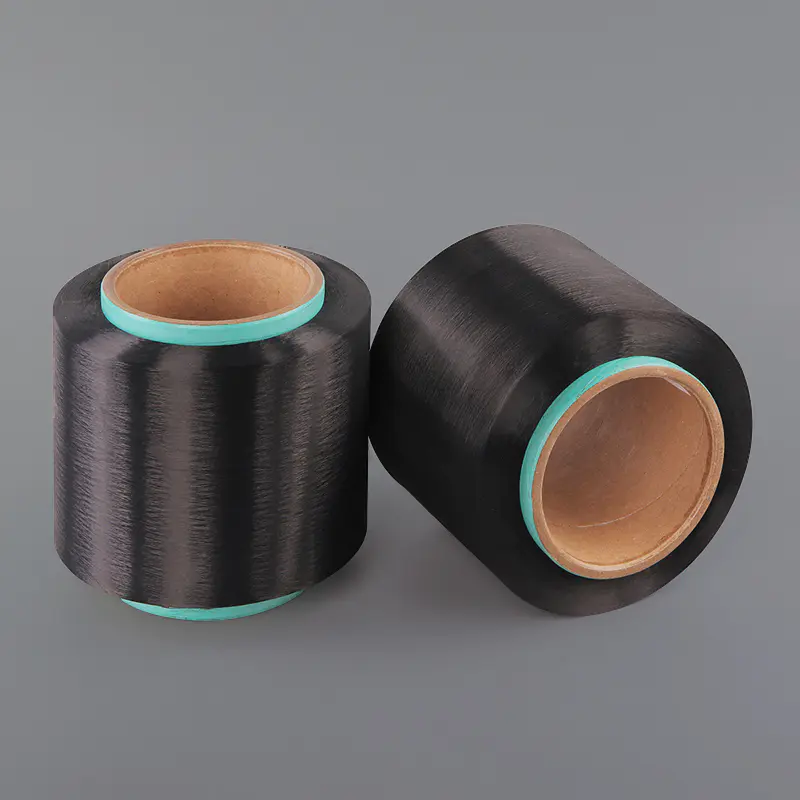 Anti Static Polyester Yarn BlackCustomization & OEM ServiceView Product →
Before committing to a container, run 100 to 200 kg of each yarn through the same fabric construction and record the dye recipe adjustments, machine settings and rejection rate. That pilot costs a fraction of a bulk claim dispute. If you want help translating your end use into a workable specification, send us your target fabric and performance requirements and we will match the polymer route to the process.
The short version: recycled polyester and polyester are interchangeable at the molecular level and nowhere near identical at the supply-chain level. Decide which property your fabric actually cannot compromise on, whether that is shade repeatability, tenacity consistency or a verifiable recycled claim, and choose the feedstock route that protects it. Everything else is paperwork and price, and both are negotiable before the order is placed, not after the first dye lot.
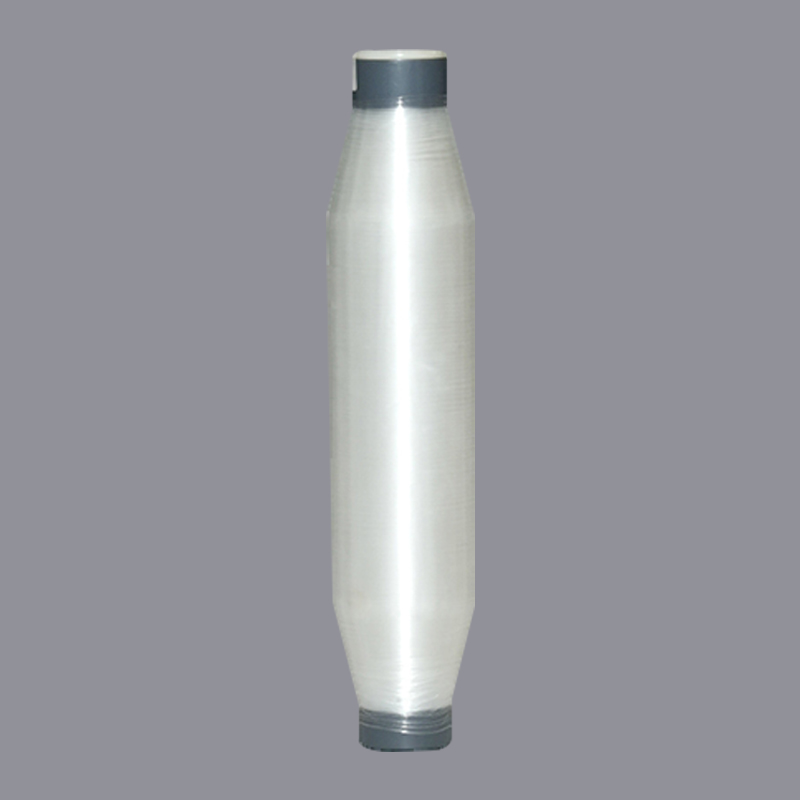
It is made with Bio-base PLA, fully biodegradable Feature: 1. Industrial compost product 2. Made with PLA 3. Eco-frie...
READ MOREPlease fill out the form below and our team will contact you as soon as possible.
Addres: No.66 Qiaogang Road, Haian, Nantong City, Jiangsu Province, China
E-mail: service@gcfiber.com admin@gcfiber.com
Copyright ? GC FIBER All Rights Reserved. Eco-Friendly Textile Products Manufacturer Biodegradable Yarn Company