 English
 中文简体
中文简体Feature:
1. Soft feel
2. High tenacity and easy rewind
3. 110 degree melting point
4. Bonding agent

A sourcing manager recently asked us whether switching a standard polyester yarn to a recycled polyester yarn would make her collection sustainable. Our answer was not a simple yes or no. Recycled polyester is a meaning...
READ MOREWhen you are choosing a yarn for a product that will face salt water, heavy friction, or months of humidity, polyester and nylon usually come up first in the discussion. Polypropylene yarn should be on that shortlist to...
READ MOREWhat Is Polyester Staple Fiber? Polyester staple fiber (PSF) is a short-length fiber extruded from polyethylene terephthalate (PET) and cut into defined lengths, usually between 3 mm and 150 mm. Unlike filament yarn, wh...
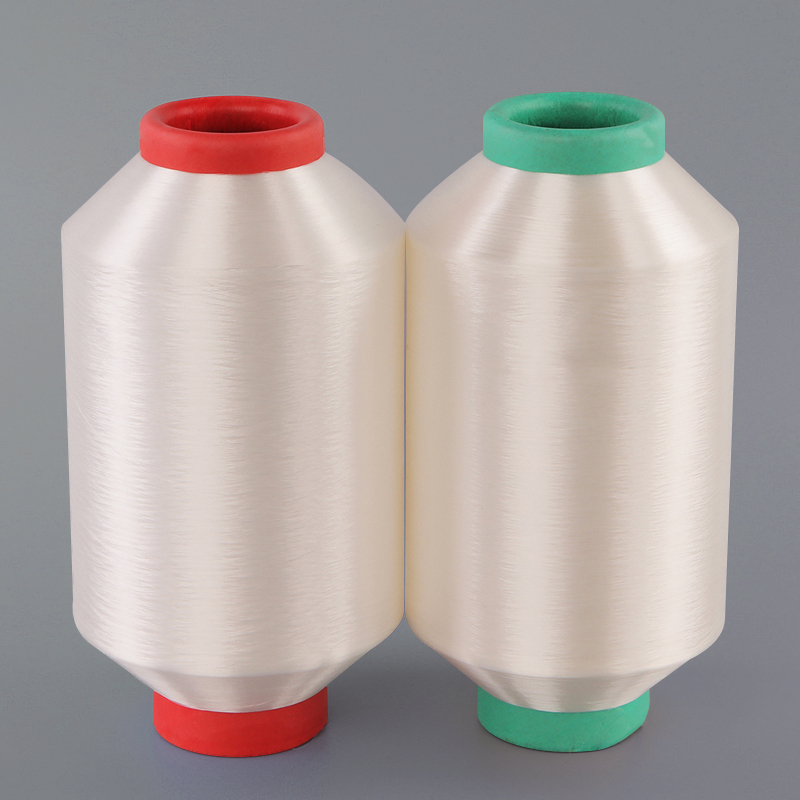
READ MOREPure Nylon Low Melting Yarn 110 Degree is a pure nylon low melting point bonding yarn engineered around a 110C melting point. It combines a soft hand feel with high tenacity, making it suitable for thermal bonding and hot melt lamination processes. This yarn is part of the low melting yarn range from NanTong Global Chemical Fiber Co Ltd GC FIBER. Since 2006, we have focused on the research, development, production, and sale of special and functional eco friendly textile products, with a portfolio that spans Biodegradable Yarn, Low Melting Yarn, ECDP Yarn, Anti Static Yarn, HDPE Yarn, Bio component Yarn, and Polyester Filament Yarn.
Four key characteristics define where this yarn fits within a hot melt bonding process.
Retains the natural softness of nylon fiber, so the bonded fabric or composite keeps its intended hand feel and drape.
Higher fiber tenacity reduces breakage during weaving, needle punching, and lamination, and unwinds smoothly on high speed equipment.
Melting point is controlled around the 110C range, allowing stable bonding at a moderate thermal processing temperature.
Once melted, the yarn bonds surrounding fibers together, which can reduce reliance on chemical adhesives and the odor or stiffness they can introduce.
Typical parameter ranges for this product line. Actual values are confirmed by test reports and order specifications for each batch.
| Parameter | Reference Value or Description |
|---|---|
| Fiber Material | Pure Nylon PA |
| Melting Point | About 110C |
| Denier Range | 20D to 210D, customizable by application |
| Tenacity | High tenacity grade for high speed processing |
| Hand Feel | Soft |
| Color | Natural white, further processing available |
| Function | Hot melt bonding agent yarn |
| Packing | Paper tube or wax tube, customizable on request |
Low melting fibers are commonly grouped by melting point range, and each range corresponds to a different base material and processing method. 110C is a common design point for nylon based low melting yarn.
Illustrative overview. Values represent common industry reference ranges, for positioning purposes only.
When heated to its set temperature, low melting fiber softens and melts, then re solidifies on cooling, binding surrounding fibers or materials together. It functions much like a solid state adhesive distributed throughout the material.
A moderate 110C bonding temperature suits the following scenarios, where both hand feel and processing temperature are important.
Used as a bonding component in hot air nonwoven fabric, reducing reliance on chemical adhesives.
Used in pillow and quilt filling to set shape through thermal bonding instead of sprayed adhesive.
Used in the bonding stage of automotive interior sound and heat insulation composites.
Acts as the bonding component in garment interlining, giving fabric the structure and support it needs.
Used in cords and composite structures that require both shape setting and bonding functions.
Applied in the bonding of composite core materials for mattresses, sofas, and similar home textile products.
Since 2006, GC Fiber has been a special textile factory in China, devoted to researching, developing, producing, and selling special and functional eco friendly textile products. Over the years we have continued to invest in process research for functional materials such as low melting yarn, and we remain open to co developing new materials with our customers.
| Founded | 2006 |
| Business | Special textile factory |
| Focus | Functional eco fibers |
| Website | gcfyarn.com |
This yarn is based on nylon PA rather than PE or co polyester. Compared with those, it offers a softer hand feel along with high fiber tenacity, making it suitable for applications that need both a soft feel and physical strength.
In actual production there is normally a process window around 110C. The exact setting depends on equipment type, composite structure, and line speed, so a small trial run before mass production is recommended.
In some applications it can replace or reduce the amount of chemical adhesive used. The extent of substitution depends on the required bond strength, hand feel, and cost target of the finished product, and can be adjusted through process trials.
The standard denier range is 20D to 210D. Specification and packing format can be customized within this range according to downstream equipment and end product requirements.
Our low melting yarn range also covers other melting point ranges and base materials, alongside Biodegradable Yarn, ECDP Yarn, Anti Static Yarn, HDPE Yarn, Bio component Yarn, and Polyester Filament Yarn. Feel free to reach out for guidance on the right option for your specific application.
Visit gcfyarn.com to browse our full product range, or reach out to discuss customization for your specific application.
Visit gcfyarn.comPlease fill out the form below and our team will contact you as soon as possible.
Addres: No.66 Qiaogang Road, Haian, Nantong City, Jiangsu Province, China
E-mail: service@gcfiber.com admin@gcfiber.com
Copyright ? GC FIBER All Rights Reserved. Custom Pure Nylon Low Melting Yarn 110 Degree Manufacturers
