English
 中文简体
中文简体It is made with Bio-base PLA, fully biodegradable Feature: 1. Industrial compost product 2. Made with PLA 3. Eco-frie...
READ MORE
Content
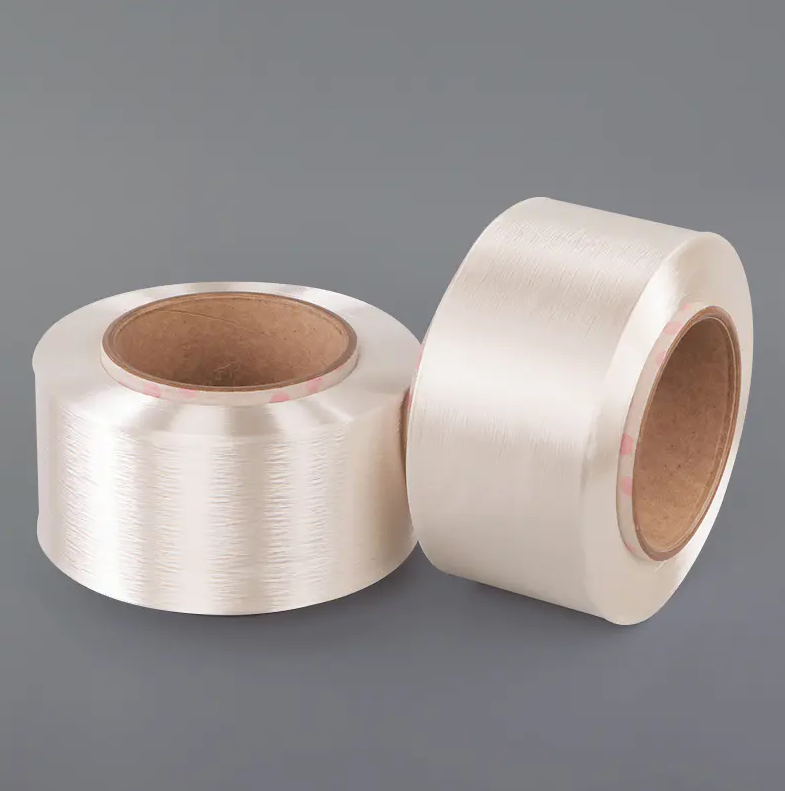
HDPE yarn (High-Density Polyethylene yarn) delivers a unique combination of high tensile strength, chemical resistance, UV stability, and low moisture absorption, making it one of the most versatile synthetic fibers in industrial and technical textile applications. Its core performance stems from the crystalline molecular structure of HDPE resin, which enables consistent mechanical output even under harsh environmental conditions. For buyers, engineers, and product developers, understanding these performance characteristics is essential before selecting HDPE yarn for a specific end-use.
HDPE yarn is produced by extruding high-density polyethylene resin through a spinneret and drawing it under controlled tension to orient the polymer chains. This orientation process is the foundation of its mechanical properties. The result is a fiber that outperforms many competing materials in weight-to-strength ratio, moisture management, and chemical inertness.
Tensile strength is the most referenced mechanical property of HDPE yarn. Standard HDPE monofilament yarn typically achieves a tenacity range of 4 to 8 grams per denier (g/d), while highly oriented HDPE fiber (such as ultra-high molecular weight variants) can exceed 15 g/d. This level of strength-to-weight ratio is critical in applications like cargo netting, geotextile fabrics, and marine ropes.
To put this in context, standard polypropylene yarn typically achieves 5–7 g/d, while nylon 6 runs at approximately 6–9 g/d. HDPE yarn occupies a competitive position while also offering advantages in chemical and UV resistance that nylon cannot match.
| Yarn Type | Tenacity (g/d) | Elongation at Break (%) | Moisture Absorption (%) |
|---|---|---|---|
| HDPE Standard | 4–8 | 10–35 | <0.01 |
| HDPE High-Oriented | 12–20+ | 3–5 | <0.01 |
| Polypropylene | 5–7 | 20–40 | <0.05 |
| Nylon 6 | 6–9 | 20–45 | 3.5–4.5 |
| Polyester (PET) | 7–9 | 15–30 | 0.4 |
The elongation at break for standard HDPE yarn falls between 10% and 35%, offering moderate elasticity. For applications that require low stretch — such as industrial slings or structural geotextiles — high-draw HDPE yarn with elongation below 5% is preferred.
One of HDPE yarn's most commercially significant advantages is its inherent resistance to ultraviolet radiation. Unlike nylon or polyester, which degrade more rapidly under prolonged UV exposure, HDPE's molecular structure is less susceptible to photo-oxidation. When UV stabilizers such as HALS (Hindered Amine Light Stabilizers) are incorporated into the resin during extrusion, HDPE yarn can retain more than 80% of its original tensile strength after 2,000 hours of accelerated weathering testing (ASTM G154 or ISO 4892 standard).
This makes HDPE yarn the fiber of choice for:
Field tests on agricultural shade netting made from UV-stabilized HDPE yarn have demonstrated service lifespans of 5 to 10 years under continuous outdoor exposure in tropical and subtropical climates, far exceeding non-stabilized alternatives.
HDPE yarn exhibits excellent resistance to a broad spectrum of chemicals, including acids, alkalis, alcohols, and many solvents. This property stems from the non-polar nature of the polyethylene backbone, which limits chemical interaction with aggressive substances. HDPE maintains structural integrity when exposed to:
One important caveat: HDPE yarn is not recommended for contact with aromatic or chlorinated hydrocarbons (e.g., toluene, chloroform) at elevated temperatures, where swelling and strength loss may occur. For such chemical environments, polyester or PTFE-based yarns may be more appropriate.
| Chemical Category | HDPE Resistance Level | Notes |
|---|---|---|
| Inorganic Acids | Excellent | Stable at ambient temperature |
| Alkalis & Bases | Excellent | All concentrations |
| Salts & Seawater | Excellent | Ideal for marine use |
| Alcohols | Good | Minor swelling at high temp |
| Aromatic Hydrocarbons | Poor (above 60°C) | Avoid prolonged contact |
| Chlorinated Solvents | Poor | Significant swelling risk |
HDPE yarn absorbs less than 0.01% moisture by weight, effectively rendering it hydrophobic. This near-zero moisture uptake delivers several performance benefits that are difficult to replicate with natural or hygroscopic synthetic fibers:
The thermal properties of HDPE yarn define its processing parameters and upper service temperature limits. Key thermal benchmarks include:
The relatively low melting point of HDPE yarn compared to polyester (melts at ~260°C) limits its use in high-heat applications such as industrial filtration in elevated-temperature processes. However, for cold-chain logistics, refrigerated storage covers, or arctic-environment applications, HDPE yarn's cryogenic flexibility down to −100°C is a meaningful performance edge.
In woven or knitted fabric production, the thermal bonding behavior of HDPE yarn is also exploited in self-bonding net structures, where selected filaments are partially melted at intersections to lock the mesh geometry without adhesives.
HDPE yarn demonstrates good-to-excellent abrasion resistance, particularly in monofilament form. The smooth, low-friction surface of HDPE filaments reduces wear at contact points in rope and webbing structures. When tested by the Taber Abrasion method, HDPE monofilament shows mass loss rates 30–50% lower than equivalent polypropylene filaments under identical test conditions.
For applications involving dynamic loading and repeated mechanical contact — such as trawling nets, conveyor belt reinforcements, or abrasion-resistant geotextiles — HDPE yarn provides durability without surface coatings or additives. However, multifilament HDPE yarns, while offering greater flexibility and coverage, may show higher surface fiber breakdown over time compared to monofilament constructions under severe abrasion conditions.
Understanding which HDPE yarn properties are most critical in each application segment helps specify the right yarn construction and additive package. The following overview maps performance priorities to end-use sectors:
Shade nets, crop support netting, and windbreak fabrics require UV stability above all. HDPE yarn with 2–4% UV masterbatch loading is standard, enabling 7–10 year outdoor service. Chemical resistance to pesticides and fertilizers adds further value here.
Fish cage netting and mooring ropes demand a combination of seawater resistance, UV stability, and tensile strength. HDPE yarn's near-zero moisture absorption prevents swelling and degradation, while its buoyancy (density 0.94–0.97 g/cm³, which is lower than water) enables floating net systems that reduce infrastructure costs.
Woven and nonwoven HDPE geotextiles are used in road base stabilization, slope protection, and drainage filtration. The combination of high tensile modulus, chemical inertness to soil compounds, and long-term dimensional stability at burial depths positions HDPE yarn as a reliable structural reinforcement material.
Woven HDPE fabric for bulk bags (FIBCs) uses flat tape yarn derived from HDPE film slitting. Tape widths of 2–4mm and thicknesses of 35–70 microns are common. The key performance criteria are loop strength, base fabric tensile rating (typically 1,000–2,000 kg safe working load per bag), and resistance to repeated filling and discharge cycles.
Not all HDPE yarns deliver the same performance. The following manufacturing variables directly affect the final mechanical and physical properties:
Despite its strong performance profile, HDPE yarn has well-documented limitations that should factor into material selection decisions:
It is made with Bio-base PLA, fully biodegradable Feature: 1. Industrial compost product 2. Made with PLA 3. Eco-frie...
READ MOREPlease fill out the form below and our team will contact you as soon as possible.
Addres: No.66 Qiaogang Road, Haian, Nantong City, Jiangsu Province, China
E-mail: service@gcfiber.com admin@gcfiber.com
Copyright ? GC FIBER All Rights Reserved. Eco-Friendly Textile Products Manufacturer Biodegradable Yarn Company